

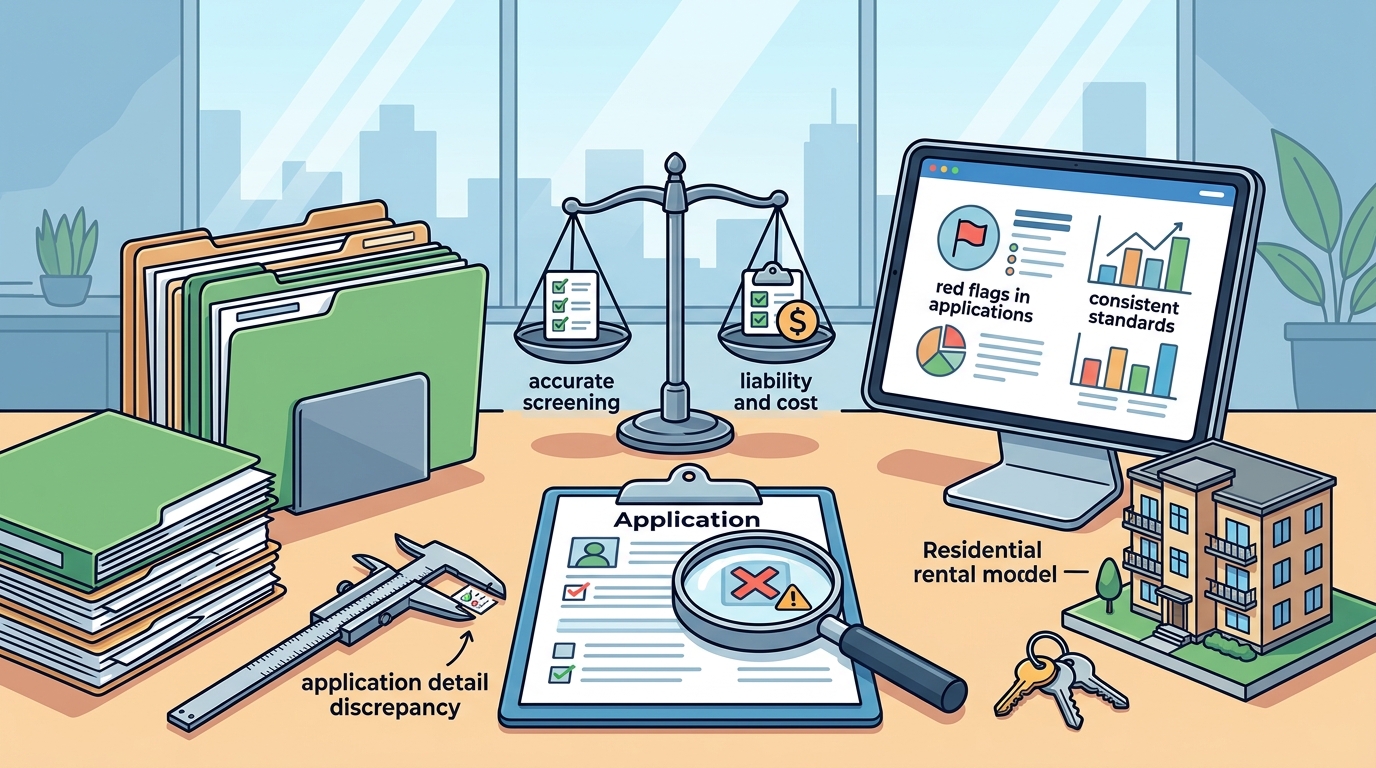
Property management is a high-stakes environment where a single bad hire can cost thousands in lost rent, legal fees, and property damage. Recent industry data indicates that approximately 25% of rental applications contain some form of discrepancy or red flag that requires careful vetting. Ignoring these nuances or applying inconsistent standards exposes landlords to significant liability under the Fair Housing Act. This guide outlines the most frequent errors in tenant screening and provides actionable strategies to protect your portfolio.
Understanding Fair Housing Compliance
The foundation of any successful screening process is strict adherence to federal and local laws. Many landlords inadvertently violate the Fair Housing Act by applying subjective criteria that disproportionately affect protected classes. For instance, rejecting an applicant solely based on their source of income, such as Section 8 vouchers, is illegal in many jurisdictions. According to the National Low Income Housing Coalition, fair housing complaints remain a leading issue in rental disputes. To mitigate this risk, establish objective, written criteria for all applicants. This includes specific credit score minimums, income-to-rent ratios, and criminal history policies. Consistency is your best defense against discrimination claims. When every applicant is held to the same measurable standard, you remove the element of bias from the equation.
Top Screening Errors
Even experienced property managers make critical errors during the application review process. One of the most common mistakes is relying on incomplete or outdated information. Applicants may omit past evictions or job changes, leading to a skewed profile. Another frequent error is failing to verify employment directly with the employer. Phone numbers listed on applications can be fabricated or belong to friends rather than actual supervisors. Always use independent verification methods to confirm income and employment status. Additionally, many landlords ignore the importance of checking previous landlord references. A current landlord might provide a glowing review, but a previous landlord can reveal patterns of late payments or property damage. At 2verifi, we emphasize the importance of comprehensive data aggregation to uncover these hidden details.
The Danger of Inconsistent Criteria
Inconsistent application of screening criteria is a major legal vulnerability. If you approve an applicant with a lower credit score because they have a higher income, you must apply that same income-to-credit ratio to all future applicants. Failure to do so can be interpreted as discriminatory practice. Document every decision and keep records of all application materials for at least three years. This documentation serves as crucial evidence if a discrimination claim is filed. It demonstrates that your decisions were based on objective business criteria rather than personal bias.
Ignoring the Full Credit Picture
Many landlords focus exclusively on the credit score number, ignoring the underlying report details. A low score might result from a single medical bill or a temporary job loss, rather than a pattern of financial irresponsibility. Conversely, a high score might mask recent, undisclosed debts. Look for trends in the credit report, such as recent late payments, high credit utilization, or numerous hard inquiries. These factors provide a more accurate picture of financial stability than the score alone. Understanding credit scores is essential for interpreting these reports correctly.
Credit and Income Analysis
Income verification is the cornerstone of financial risk assessment. The standard rule of thumb is that gross monthly income should be at least three times the monthly rent. However, this rule is not universal. In high-cost areas, landlords may adjust this ratio based on market conditions. Always verify income through pay stubs, bank statements, or direct employer contact. For self-employed applicants, request tax returns for the past two years. This provides a clearer view of their actual earning potential. According to the U.S. Census Bureau, housing cost burden is a significant factor for many renters, making accurate income verification even more critical. Do not accept verbal assurances of income. Written documentation is the only reliable proof.
Debt-to-Income Ratio
Beyond gross income, calculate the applicant's debt-to-income (DTI) ratio. This metric reveals how much of their income is already committed to existing debts. A high DTI suggests that the applicant may struggle to pay rent if unexpected expenses arise. Include obligations such as car loans, student loans, and credit card minimums in this calculation. A DTI below 43% is generally considered safe for rental purposes. This analysis helps predict future payment behavior more accurately than income alone.
Background Check Pitfalls
Criminal background checks are a necessary part of tenant screening, but they must be handled with care. blanket bans on anyone with a criminal record are increasingly viewed as discriminatory under the Fair Housing Act. Instead, evaluate each case individually. Consider the nature and severity of the offense, the time elapsed since the conviction, and evidence of rehabilitation. According to the National Employment Law Project, many employers and landlords are moving toward individualized assessments to comply with fair housing guidelines. This approach balances safety with fairness. Always check national, state, and county records to ensure comprehensive coverage. Local records often contain the most relevant information regarding recent activity.
Eviction History Verification
Eviction history is a strong predictor of future rental behavior. However, not all evictions are created equal. Some may result from job loss or medical issues, while others indicate a pattern of non-payment. Look for the reason for eviction and the amount owed. An applicant who paid off a previous eviction debt may be a lower risk than one who left with significant arrears. Verify eviction records through court databases or specialized tenant screening services. These services provide access to data that is not publicly available. At 2verifi services, we provide detailed eviction history reports to help you make informed decisions.
Screening Method Comparison
Choosing the right screening method is crucial for accuracy and efficiency. Manual screening is time-consuming and prone to human error. Automated services offer speed and consistency but may miss nuanced details. Hybrid approaches often yield the best results. The table below compares common screening methods.
| Method | Pros | Cons | Best For |
|---|---|---|---|
| Automated Screening | Fast, consistent, comprehensive data | May lack nuance, requires subscription | High-volume landlords |
| Manual Verification | Highly detailed, personalized | Time-consuming, prone to error | Single-property owners |
| Hybrid Approach | Balances speed and depth | Requires oversight | Most property managers |
| Reference Checks | Insights into behavior | Subjective, may be biased | Supplemental data |
Key Takeaways
- Consistency is Key: Apply the same criteria to all applicants to avoid fair housing violations.
- Verify Everything: Do not rely on self-reported data. Verify income, employment, and references independently.
- Understand Credit: Look beyond the score to analyze trends and debt obligations.
- Evaluate Criminal History Individually: Avoid blanket bans. Consider the nature and recency of offenses.
- Document Decisions: Keep detailed records of all screening steps and decisions for legal protection.
- Use Professional Services: Leverage tools like 2verifi for comprehensive and accurate screening.
- Stay Updated: Regularly review fair housing laws in your jurisdiction to ensure compliance.
Frequently Asked Questions
What is the most common tenant screening mistake?
The most common mistake is failing to verify income and employment directly with the source. Applicants may provide falsified pay stubs or contact information. Always confirm employment and income through independent channels to ensure accuracy.
How do I handle criminal background checks legally?
Follow the EEOC guidelines for criminal background checks. Evaluate each conviction individually based on the nature of the offense, the time elapsed, and the relevance to the rental property. Avoid blanket bans on applicants with criminal records.
What is a good credit score for renting?
While there is no universal standard, a credit score of 620 or higher is generally considered acceptable by most landlords. However, a higher score may result in better terms or lower deposits. Always consider the full credit report, not just the score.
Can I reject an applicant based on their credit score?
Yes, you can reject an applicant based on their credit score if you apply this criterion consistently to all applicants. Ensure that your credit score threshold is clearly stated in your rental criteria and applied uniformly.
How far back should I check eviction history?
Typically, landlords review eviction history for the past seven years. However, some states have different reporting periods. Check local laws to determine the appropriate timeframe for your jurisdiction.
What is tenant screening?
Tenant screening is the process of evaluating potential renters to determine their suitability for a rental property. It typically includes credit checks, background checks, income verification, and reference checks.
Why is income verification important?
Income verification ensures that the applicant has the financial means to pay rent consistently. It reduces the risk of late payments or eviction due to financial hardship. Verifying income through pay stubs or employer contact provides reliable data.
Secure Your Portfolio Today
Protecting your rental property requires a robust and compliant screening process. Avoid the pitfalls of manual errors and legal risks by leveraging professional screening tools. 2verifi offers comprehensive tenant screening services designed to help landlords make informed, fair, and secure decisions. Visit our services page to learn more about how we can assist you in building a reliable tenant base. Contact us today to streamline your screening process and safeguard your investment.