

How to Choose a Fast Provider
Speed in background checking is not just about how fast a report is generated. It is about data accuracy and source reliability. A provider that returns a report in two hours but contains outdated or incorrect data creates more risk than a provider that takes 24 hours. When evaluating providers, look for those that use direct source verification rather than relying solely on third-party data aggregators. For additional details, review the .
Automation vs. Manual Review
Data Freshness
The age of the data matters as much as the speed of retrieval. Some providers use cached data that may be weeks old. To ensure the fastest and most accurate results, verify that the provider pulls data in real-time from primary sources. This ensures that recent arrests, judgments, or employment gaps are captured immediately. For additional details, review the Customer Experience.
Questions to Ask Before Committing
Before signing a contract with a background check provider, you must ask specific questions about their infrastructure and compliance. Do not accept vague answers about "fast processing." Demand specific metrics and explanations of their data pipeline. For additional details, review the Frequently Asked Questions.
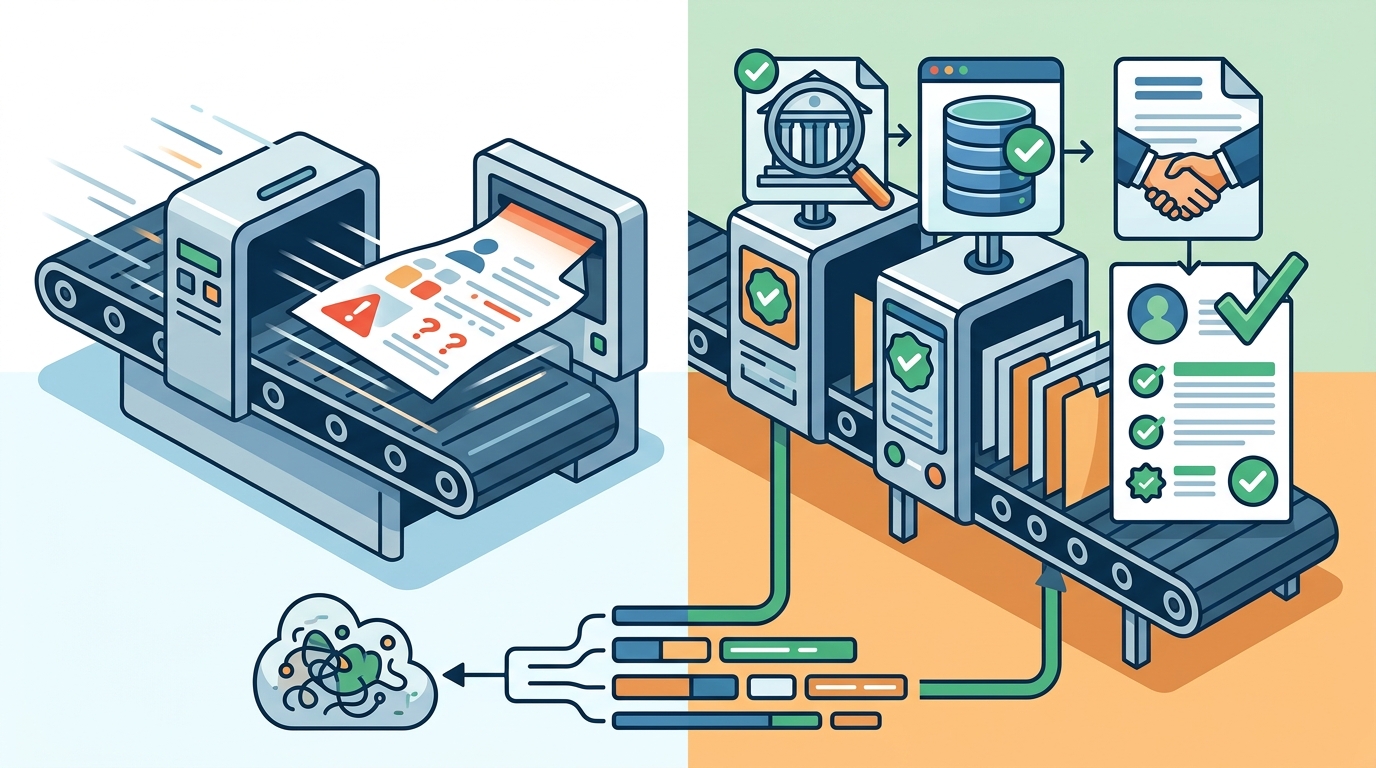
Key Questions for Vendors
- What is the average turnaround time for a standard 7-year employment check? For additional details, review the About.
- Do you pull data in real-time or from a cached database?
- How do you handle name matches that require manual disambiguation?
- What is your compliance status with the Fair Credit Reporting Act (FCRA)?
Providers like 2verifi provide transparent dashboards that allow you to track the status of each check in real-time. This visibility is critical for HR teams managing high-volume hiring pipelines.
Verifying Provider Claims
Many background check providers market themselves as "instant" or "same-day." To verify these claims, request a sample report for a known subject. This test reveals the true speed and accuracy of the provider. If the sample report takes longer than advertised or contains errors, the provider's marketing claims are likely exaggerated.
Testing the Pipeline
Run a test check on a subject with a complex history, such as multiple name variations or records in different states. This stress-tests the provider's ability to handle edge cases. A robust system will flag these complexities for review rather than returning an incomplete report. 2verifi's system is designed to handle these complexities without significantly delaying the overall turnaround time.
The Screening Process and Timeline
Understanding the workflow helps you set realistic expectations for speed. The process typically involves four stages: data collection, matching, verification, and reporting. Each stage has a different impact on total turnaround time.
Stage 1: Data Collection
Stage 2: Matching and Disambiguation
Stage 3: Verification
For employment and education checks, the provider contacts the previous employer or institution. This step can vary in speed depending on the responsiveness of the third party. 2verifi maintains relationships with major employers and educational institutions to expedite this process.
Stage 4: Reporting
Cost Drivers for Speed
Speed often comes at a premium, but not always. The cost of a background check depends on the depth of the search, the number of records found, and the provider's pricing model. Some providers charge a flat rate, while others charge per record. For high-volume users, a flat rate is often more predictable.
Volume Discounts
Common Mistakes to Avoid
Even with a fast provider, errors can occur if the process is not managed correctly. The most common mistake is providing incomplete candidate data. If the candidate's date of birth or Social Security number is incorrect, the system may return no results or incorrect results. Always verify candidate data before initiating a check.
Ignoring Adverse Action Procedures
Another critical mistake is failing to follow FCRA adverse action procedures. If a background check reveals negative information, you must provide the candidate with a copy of the report and a summary of their rights before making a hiring decision. Skipping this step can lead to legal liability, regardless of how fast the check was completed.
2verifi vs. Alternatives
When comparing 2verifi to other providers, focus on turnaround time, accuracy, and compliance. The following table summarizes the key differences.
| Provider | Average Turnaround | Data Source | Compliance |
|---|---|---|---|
| 2verifi | Under 24 hours | Direct and Real-Time | FCRA Compliant |
| Generic Aggregator | 3-5 days | Cached Third-Party | Varies |
| Manual Service | 5-10 days | Primary Sources | FCRA Compliant |
Industry-Specific Scenarios
Healthcare and Education
In healthcare and education, speed is critical due to high turnover and regulatory requirements. 2verifi's fast turnaround helps these organizations fill vacancies quickly while maintaining compliance with state and federal regulations.
Legal Rules and Protections
Background checks are governed by the Fair Credit Reporting Act (FCRA) and state-specific laws. The FCRA requires that you obtain written consent from the candidate before running a background check. It also requires that you provide a pre-adverse action notice if you plan to take negative action based on the report. 2verifi provides tools to help you comply with these requirements.
State-Specific Laws
Some states have additional laws that limit the use of criminal history in hiring decisions. For example, California's "Ban the Box" law prohibits employers from asking about criminal history on initial job applications. 2verifi helps you navigate these state-specific rules to ensure compliance.
Regional Variations in Speed
Strategic Timing for Hiring
Timing is critical in hiring. If you wait until the final stage of the interview process to run a background check, you may delay the offer. It is best to run the check as soon as you have a strong candidate. 2verifi's fast turnaround allows you to run checks early in the process without delaying the hiring timeline.
Long-Term Performance Metrics
Key Takeaways
- Speed should not come at the expense of accuracy. Look for providers that use direct source verification.
- Always test a provider with a sample report before committing to a contract.
- Volume discounts can make fast screening more affordable for high-volume users.
- Follow FCRA adverse action procedures to avoid legal liability.
- Customize your check package to meet industry-specific requirements.
- Track provider performance metrics over time to ensure continued quality.
Frequently Asked Questions
How fast is 2verifi's background check?
2verifi typically completes standard pre-employment checks in under 24 hours. Complex cases may take longer, but 2verifi provides real-time status updates so you can track progress.
Is 2verifi FCRA compliant?
Yes, 2verifi is fully compliant with the Fair Credit Reporting Act. They provide tools to help you obtain consent and follow adverse action procedures.
Can I integrate 2verifi with my ATS?
What happens if a check is delayed?
If a check is delayed due to complex records or unresponsive third parties, 2verifi will notify you and provide an estimated completion time. You can also request a partial report if needed. Learn more: 2verifi com.