

Landlords and property managers face significant financial risks when vetting new residents. According to the National Multifamily Housing Council, the average cost to replace a tenant can range from $3,500 to $5,000, encompassing lost rent, advertising, and cleaning fees. This statistic highlights why a rigorous, standardized vetting process is not just a best practice but a financial necessity for asset protection. Professional tenant screening goes far beyond a simple credit check. It involves a holistic analysis of an applicant's financial stability, rental history, criminal background, and legal eligibility to lease. By implementing a systematic approach, property owners can mitigate liability, ensure consistent compliance with Fair Housing laws, and secure reliable income streams for their portfolios.
Why Professional Screening Matters
Manual screening is prone to human error and unconscious bias, which can lead to costly legal disputes. Professional screening services utilize automated databases and standardized criteria to evaluate every applicant objectively. This consistency is crucial for maintaining compliance with the Fair Housing Act, which prohibits discrimination based on race, color, religion, sex, national origin, familial status, or disability. By relying on data-driven insights, landlords can make defensible decisions that protect their properties and their legal standing. The goal is to identify red flags early, such as past evictions or unresolved debts, before a lease is signed. This proactive approach saves time and prevents the nightmare of dealing with non-paying tenants or property damage.
Core Components of the Process
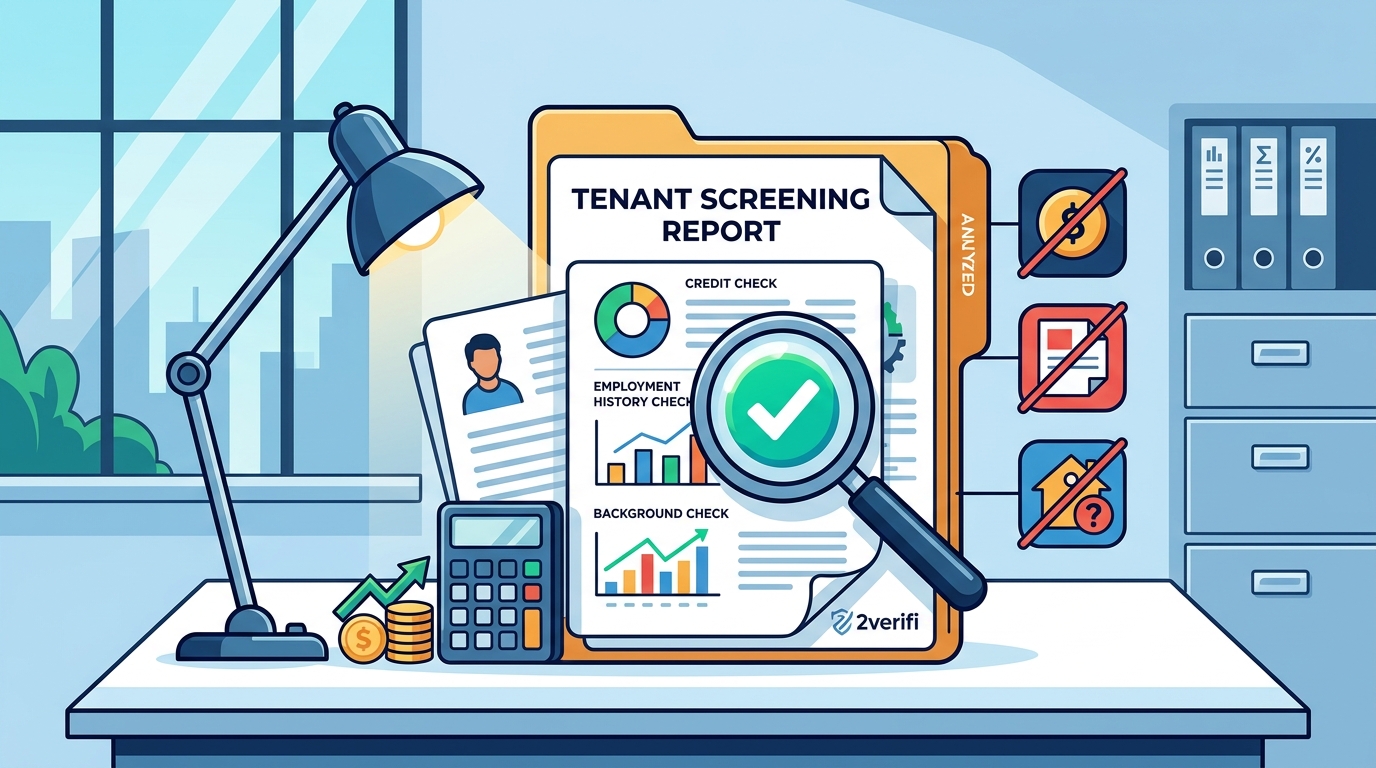
A comprehensive tenant screening report typically includes several distinct modules. Each module provides a specific layer of insight into the applicant's reliability. Understanding these components allows landlords to weigh risks accurately. The process is not about finding a perfect candidate, as that rarely exists. Instead, it is about finding a candidate whose risks are manageable and whose strengths outweigh potential liabilities. The following sections detail the specific data points that constitute a professional report.
Identity Verification
Before diving into financials, the first step is confirming who the applicant actually is. Identity verification ensures that the person applying is not using a fake name or stolen identity. This step often involves checking government-issued IDs against national databases. It also includes verifying the applicant's Social Security Number to ensure it matches their name and address history. This foundational step prevents fraud and ensures that the subsequent credit and criminal checks are linked to the correct individual. Without accurate identity verification, the rest of the screening process is built on shaky ground.
Credit and Financial Verification
Credit history is a primary indicator of financial responsibility. However, it is not the only factor. Professional screening looks at the entire credit profile, including payment history, outstanding debts, and public records. The standard benchmark for many landlords is a credit score of 620 or higher, though this varies by market. According to Experian, a credit score below 580 is considered poor and may indicate a higher risk of default. Beyond the score, landlords examine the debt-to-income ratio. A common rule of thumb is that rent should not exceed 30% of the applicant's gross monthly income. This ensures the tenant has sufficient funds for other living expenses. If an applicant has a low score, landlords may look for compensating factors, such as a large security deposit or a co-signer. (Credit Scores Consumer)
Rental History Analysis
Past behavior is the best predictor of future performance. Rental history verification involves contacting previous landlords to confirm the applicant's tenancy dates, payment consistency, and condition of the property. This step is critical because it reveals patterns that credit reports cannot. For example, an applicant might have a good credit score but a history of late rent payments that were eventually paid. Conversely, someone with a lower credit score might have a stellar rental history of on-time payments and excellent care of the property. Professional services automate this outreach, sending standardized inquiries to previous landlords to ensure consistent and legally compliant responses. This data helps identify chronic late payers or those who have caused significant property damage. (Significant Actions to)
Criminal and Eviction Checks
Safety is a paramount concern for landlords and other residents. Criminal background checks search national, state, and county records for felony and misdemeanor convictions. However, landlords must be careful to comply with local laws regarding how long ago a conviction occurred and the nature of the crime. The Fair Credit Reporting Act (FCRA) governs how this information can be used. Eviction history is equally important. An eviction record indicates a serious breakdown in the landlord-tenant relationship. According to the U.S. Census Bureau, eviction filings have risen in recent years, making this a critical data point for risk assessment. Professional screening services aggregate eviction records from court databases, providing a clear picture of any past legal disputes. This helps landlords avoid tenants who may be likely to initiate frivolous lawsuits or fail to vacate when necessary.
Comparing Screening Options
Landlords have several options for conducting screenings, each with different levels of depth and cost. Choosing the right method depends on the size of the portfolio and the landlord's technical comfort level. The table below outlines the primary methods available.
| Method | Cost Range | Depth of Data | Compliance Support |
|---|---|---|---|
| Professional Online Service | $30 - $60 per applicant | Comprehensive (Credit, Criminal, Eviction) | High (FCRA compliant templates) |
| Manual DIY Checks | $5 - $15 per check | Limited (Single database searches) | Low (Manual compliance burden) |
| Property Management Software | $50 - $100/month | Integrated (Automated workflows) | Medium to High |
| Local Screening Agencies | $50 - $100 per applicant | Deep (Local court records) | Medium |
Professional online services like those offered by 2verifi provide the best balance of cost and comprehensiveness. They automate the collection of data from multiple sources, ensuring that no stone is left unturned. Manual checks are cheaper but time-consuming and prone to missing critical data points. Property management software is ideal for larger portfolios, offering automation and tenant portal integration. Local agencies may provide deeper local court records but often lack the speed and digital convenience of online platforms.
Key Takeaways
- Cost of Replacement: The average cost to replace a tenant is between $3,500 and $5,000, making screening a cost-saving measure.
- Credit Score Benchmark: A credit score of 620 or higher is generally considered the minimum threshold for low-risk applicants. (Credit Scores Consumer)
- Income Ratio: Rent should typically not exceed 30% of the applicant's gross monthly income to ensure affordability.
- Fair Housing Compliance: Standardized criteria are essential to avoid discrimination claims under the Fair Housing Act.
- Rental History Value: Past landlord references often reveal more about reliability than credit scores alone.
- Eviction Records: Checking court records for past evictions is critical for assessing legal risk.
- Identity Verification: Confirming identity prevents fraud and ensures accurate reporting. (Significant Actions to)
Frequently Asked Questions
What is the difference between a credit check and a full tenant screening?
A credit check only provides financial data from credit bureaus. A full tenant screening includes credit, criminal history, eviction records, and rental history verification, providing a complete risk profile.
How far back do criminal background checks go?
Criminal checks typically search national databases for the past seven to ten years, but state and local laws may vary. Some jurisdictions limit how far back landlords can look.
Can I deny an applicant based on a criminal record?
Yes, but you must apply criteria consistently to all applicants to avoid Fair Housing violations. The nature of the crime and how long ago it occurred are important factors.
What is the purpose of income verification?
Income verification ensures the applicant earns enough to pay rent reliably. It usually involves checking pay stubs, tax returns, or bank statements.
Do I need permission to screen a tenant?
Yes, you must have written consent from the applicant before conducting any background or credit checks. This is a requirement under the FCRA.
What is a compensating factor in tenant screening?
A compensating factor is a positive attribute that offsets a negative one, such as a large security deposit or a co-signer, which can help an applicant with a lower credit score.
How long does a professional screening take?
Most professional online screening services provide results within minutes to a few hours, depending on the complexity of the applicant's history.
What is tenant screening?
Tenant screening is the process of evaluating prospective tenants to determine their suitability for a rental property based on financial, criminal, and rental history data.
What is a credit score?
A credit score is a numerical representation of an individual's creditworthiness, calculated based on their credit history and payment behavior.
What is an eviction record?
An eviction record is a legal document showing that a landlord has initiated proceedings to remove a tenant from a rental property due to lease violations.
Secure Your Portfolio Today
Protecting your investment requires more than just a lease agreement. It demands a robust, data-driven vetting process that leaves no room for ambiguity. By leveraging professional screening tools, you gain access to comprehensive reports that empower you to make confident, compliant, and profitable decisions. Don't leave your property's future to chance. Start your professional tenant screening process with 2verifi today and ensure your next tenant is the right fit for your portfolio.