

Employment verification is the backbone of risk management in modern hiring and lending. According to recent industry data, over 60% of resumes contain some form of exaggeration or inaccuracy. This statistic highlights why rigorous background checks are no longer optional but essential for organizational integrity. When you need to confirm a candidate's work history, the margin for error is virtually zero. Inaccurate data can lead to costly legal liabilities, bad hires, and operational disruptions. The process requires a systematic approach that prioritizes data integrity, compliance, and speed. This guide outlines the exact steps to ensure your verification outcomes are both reliable and defensible.
Understanding the Need for Precision
Employment verification is the process of confirming that a job applicant or employee actually worked for a specific company, held the title they claimed, and was employed during the stated dates. Employment verification is the systematic confirmation of a candidate's professional history. Without this confirmation, organizations operate on assumptions rather than facts. The stakes are high. A single discrepancy in dates or titles can signal potential fraud or incompetence.
Traditional methods, such as manual phone calls to previous employers, are prone to human error and bias. They are also slow, often taking days or weeks to complete. In today's fast-paced hiring environment, speed and accuracy must coexist. This is where automated, API-driven solutions become critical. They reduce the latency of data retrieval while increasing the fidelity of the information obtained.
Choosing the Right Verification Partner
The accuracy of your verification results depends heavily on the infrastructure of the provider you choose. Not all verification services are created equal. Some rely on outdated databases, while others utilize real-time API connections to HR systems. When evaluating partners, look for providers that offer direct data integration rather than manual lookup services.
2Verifi specializes in providing high-fidelity verification services that leverage advanced data aggregation techniques. By using a platform like 2Verifi, you gain access to a network that prioritizes data accuracy and speed. The platform is designed to handle complex verification requests that might stall traditional background check companies. Choosing a provider with a robust technological backbone ensures that you are not just getting a "yes" or "no" answer, but a detailed, verifiable data set.
Consider the following factors when selecting a vendor:
- Data Sources: Do they use direct employer APIs or third-party aggregators?
- Compliance: Are they FCRA (Fair Credit Reporting Act) compliant?
- Turnaround Time: Can they deliver results in hours rather than days?
- Accuracy Rate: What is their documented error rate for date and title verification?
The Step-by-Step Verification Workflow
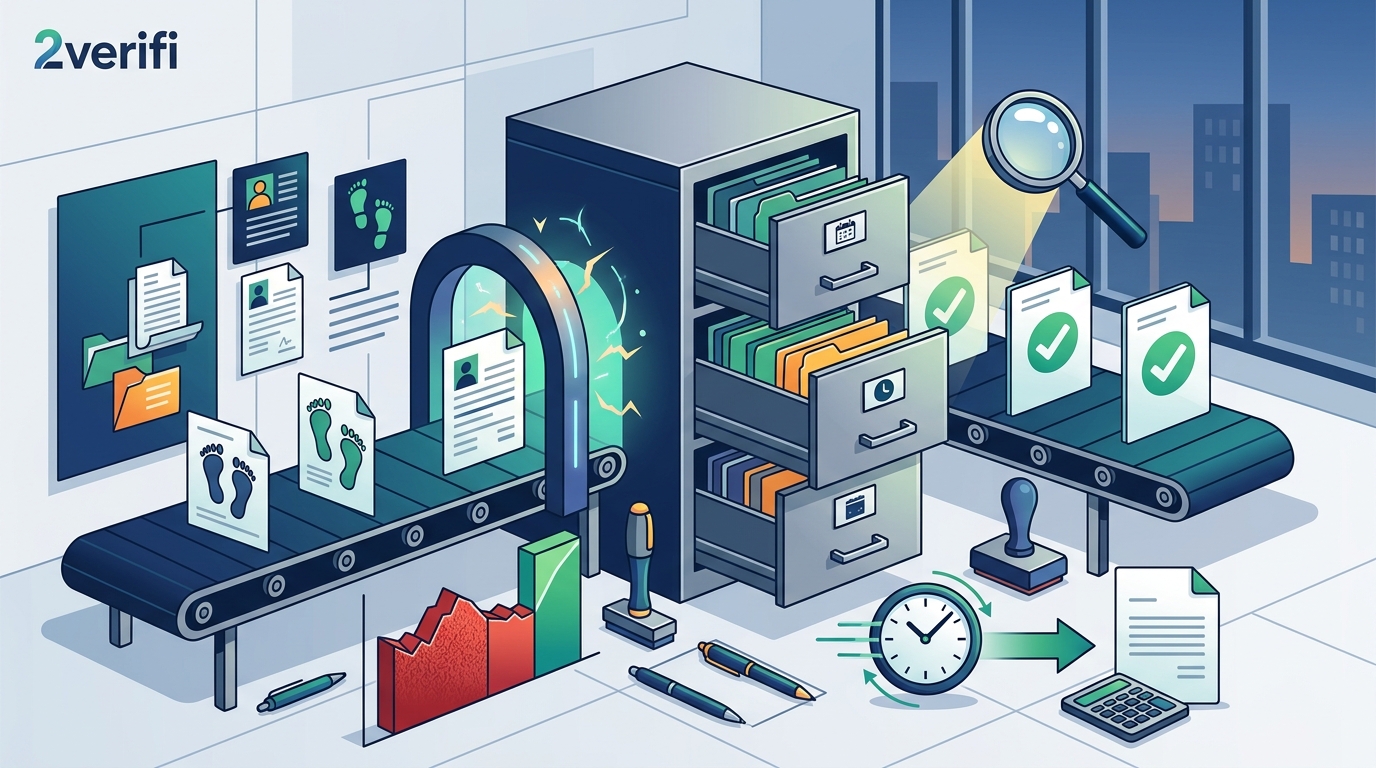
To get accurate information, you must follow a structured workflow. Deviating from this process introduces risk. The following steps outline the standard operating procedure for high-integrity verification.
Step 1: Secure Explicit Consent
Before initiating any check, you must obtain written consent from the candidate. This is not just a best practice; it is a legal requirement in many jurisdictions. The consent form must clearly state the purpose of the verification and the scope of the data being collected. Without this document, any data you collect is inadmissible and potentially illegal. Always secure explicit, written consent before initiating any background check.
Step 2: Input Candidate Data
Enter the candidate's information into your verification platform. This includes their full legal name, any aliases or maiden names, and the specific details of their previous employment. Accuracy at this stage is paramount. If the input data is flawed, the output will be irrelevant. Ensure that the dates of employment and job titles provided by the candidate are entered exactly as they appear on their resume or application.
Step 3: Automated Cross-Referencing
Once the data is submitted, the verification engine begins its work. It cross-references the candidate's claims against multiple data sources. These sources may include public records, tax databases, and direct employer APIs. The goal is to triangulate the truth. If one source says the candidate worked from January 2020 to December 2022, and another says January 2020 to November 2022, the system flags this for review. Automated cross-referencing reduces human bias and increases data fidelity.
Step 4: Discrepancy Resolution
When discrepancies are found, they must be resolved. This often involves contacting the candidate for clarification or reaching out to the previous employer directly. However, with a platform like 2Verifi, many discrepancies are resolved automatically through higher-level data matching algorithms. This step ensures that minor errors, such as typos in dates, do not lead to false positives.
Ensuring Legal Compliance and Consent
Compliance is the shield that protects your organization from litigation. The Fair Credit Reporting Act (FCRA) governs how consumer report agencies, including employment verification providers, must operate. Non-compliance can result in severe fines and reputational damage.
Key compliance requirements include:
- Disclosure: You must disclose to the candidate that a background check will be performed.
- Authorization: You must get the candidate's written permission.
- Pre-Adverse Action: If you plan to deny employment based on the report, you must provide a copy of the report and a summary of rights.
- Adverse Action: If you deny employment, you must provide a formal adverse action notice.
Using a reputable provider like 2Verifi helps mitigate these risks because they are built to adhere to these federal and state regulations. They handle the complex legal frameworks so you can focus on hiring decisions.
Interpreting and Acting on Results
Receiving the verification report is only half the battle. Interpreting the data correctly is the other half. A report will typically show three key data points: dates of employment, job titles, and eligibility for rehire. Employment verification is the systematic confirmation of a candidate's professional history. Understanding the nuances of these data points is crucial.
For example, a gap in employment dates might indicate a period of unemployment, but it could also indicate a clerical error by the previous employer. In such cases, it is important to contact the candidate for context before making a final decision. Similarly, a discrepancy in job titles might be due to different internal naming conventions at the previous company. Always seek clarification before rejecting a candidate based on a single data point.
Key Takeaways
- Accuracy is Critical: Over 60% of resumes contain inaccuracies, making verification essential.
- Consent is Mandatory: Always obtain written consent before starting any verification process.
- Technology Matters: API-driven solutions like 2Verifi offer faster and more accurate results than manual checks.
- Compliance Protects You: Adhering to FCRA guidelines prevents legal liabilities and fines.
- Context is Key: Always investigate discrepancies before making adverse employment decisions.
- Speed and Precision: Automated systems reduce turnaround time while increasing data fidelity.
- Vendor Selection: Choose partners with robust data sources and proven compliance records.
Frequently Asked Questions
How long does employment verification take?
Traditional manual verification can take 3 to 5 business days. However, automated platforms like 2Verifi can often deliver results in a matter of hours by leveraging direct data integrations.
What information is typically verified?
Standard verification includes dates of employment, job titles, and sometimes salary history. Some services also verify eligibility for rehire and reason for leaving.
Is employment verification legal?
Yes, it is legal and standard practice, provided you obtain the candidate's written consent and follow FCRA guidelines. Without consent, it is illegal.
What happens if there is a discrepancy in the data?
If discrepancies are found, the candidate should be contacted for clarification. Minor errors may be corrected, while significant fraud may lead to disqualification.
Can I verify employment for former employees?
Yes, but you must have a permissible purpose and, in many cases, the consent of the former employee. Current employment verification typically requires active consent.
How does 2Verifi ensure data accuracy?
2Verifi uses advanced API connections and data aggregation techniques to pull information directly from source systems, minimizing human error and latency.
What is the cost of employment verification?
Costs vary based on the depth of the check and the provider. Automated services often offer competitive pricing due to lower operational overhead compared to manual checks.
Get Started with 2Verifi
Stop relying on outdated manual processes that slow down your hiring and compromise your data integrity. Switch to a verification partner that delivers speed, accuracy, and compliance. Visit 2Verifi today to streamline your employment verification workflow and make smarter, data-driven hiring decisions.