

Employers who skip proper background verification procedures face significant legal and operational risks. According to recent industry data, approximately 85% of employers conduct background checks on candidates, yet many still struggle with compliance nuances. This statistic highlights that while the practice is standard, the execution is often flawed. Failing to align your screening process with current regulations can lead to costly lawsuits, reputational damage, and the hiring of unqualified personnel. This guide details the most frequent errors in the verification workflow and provides actionable strategies to ensure your hiring process remains secure, compliant, and efficient.
Understanding Compliance and Legal Frameworks
The foundation of any robust background check program is a deep understanding of the legal landscape. Many organizations treat compliance as an afterthought, leading to severe penalties. The Fair Credit Reporting Act (FCRA) is the primary federal law governing consumer reports, including criminal and employment background checks. It mandates specific procedures for employers and consumer reporting agencies.
Another critical framework is the Equal Employment Opportunity Commission (EEOC) guidance. The EEOC emphasizes that employers must ensure their screening practices do not disproportionately exclude protected groups. This means that blanket bans on criminal records are often illegal unless they are job-related and consistent with business necessity. Ignoring these guidelines can result in discrimination claims that are difficult to defend.
State and local laws, often referred to as "Ban the Box" regulations, further complicate the landscape. These laws restrict when and how employers can inquire about criminal history. For instance, some jurisdictions prohibit asking about criminal records on initial job applications. Understanding these local nuances is essential for multi-state employers. You must maintain a dynamic compliance calendar to track changes in legislation across all regions where you operate.
FCRA Violations and Documentation Errors
FCRA compliance is the most common source of litigation in the background check industry. One frequent mistake is failing to obtain proper written authorization from the candidate before initiating a check. Without explicit consent, any background check is illegal. This authorization must be a standalone document, separate from the job application, to ensure the candidate is fully aware of the disclosure.
Another critical error involves the pre-adverse action notice. If you intend to deny employment based on information in a background report, you must provide the candidate with a copy of the report and a summary of their rights under the FCRA. This step gives the candidate an opportunity to dispute inaccuracies. Skipping this step deprives the candidate of due process and exposes the employer to liability.
Documentation errors also occur when employers fail to retain records properly. The FCRA requires employers to keep records of background checks and related decisions for a specific period, typically five years. Poor record-keeping can make it impossible to defend against a future audit or lawsuit. Implementing a secure, centralized digital archive for all screening documents is a best practice.
Defining the Scope of the Investigation
Over-screening is a prevalent issue where employers request information that is irrelevant to the job. For example, running a credit check on a warehouse worker with no financial responsibilities is often prohibited by state laws and can be viewed as an invasion of privacy. The scope of the background check must be tailored to the specific role. A financial analyst may require a credit history review, while a software developer may only need a criminal and education verification.
Under-screening is the opposite problem. Some employers skip checks for key positions due to cost or time constraints, only to discover later that the candidate has a history of fraud or violence. This mistake can lead to negligence claims if the employee harms others or the company. A risk-based approach is essential. Assess the sensitivity of the role and the potential impact of a bad hire to determine the appropriate level of scrutiny.
Time-frame limitations are another critical aspect of scope. Many employers mistakenly search criminal records indefinitely. However, the EEOC and many state laws suggest that older convictions become less relevant over time. A common standard is to look back seven to ten years, depending on the jurisdiction and the nature of the offense. Focusing on recent and relevant history ensures that the screening process is both fair and legally defensible.
Data Security and Privacy Breaches
Background checks involve the collection and storage of sensitive personal data, including social security numbers, dates of birth, and criminal records. Mishandling this data can lead to identity theft for candidates and significant liability for the employer. Data breaches are a growing concern in the hiring industry, with cybercriminals targeting HR databases.
One common mistake is using unsecured channels to transmit background check requests. Employers must use encrypted platforms and secure APIs to send data to verification agencies. Additionally, access to background check results should be restricted to authorized personnel only. Implementing role-based access controls ensures that only those who need the information for hiring decisions can view it.
Retention policies are also crucial. Employers should not keep background check data longer than necessary. Once the hiring decision is made and the required retention period has passed, the data should be securely destroyed. Failing to do so increases the risk of a data breach and violates privacy principles. Regular audits of data storage practices can help identify and mitigate these risks.
Unconscious Bias and Inconsistent Standards
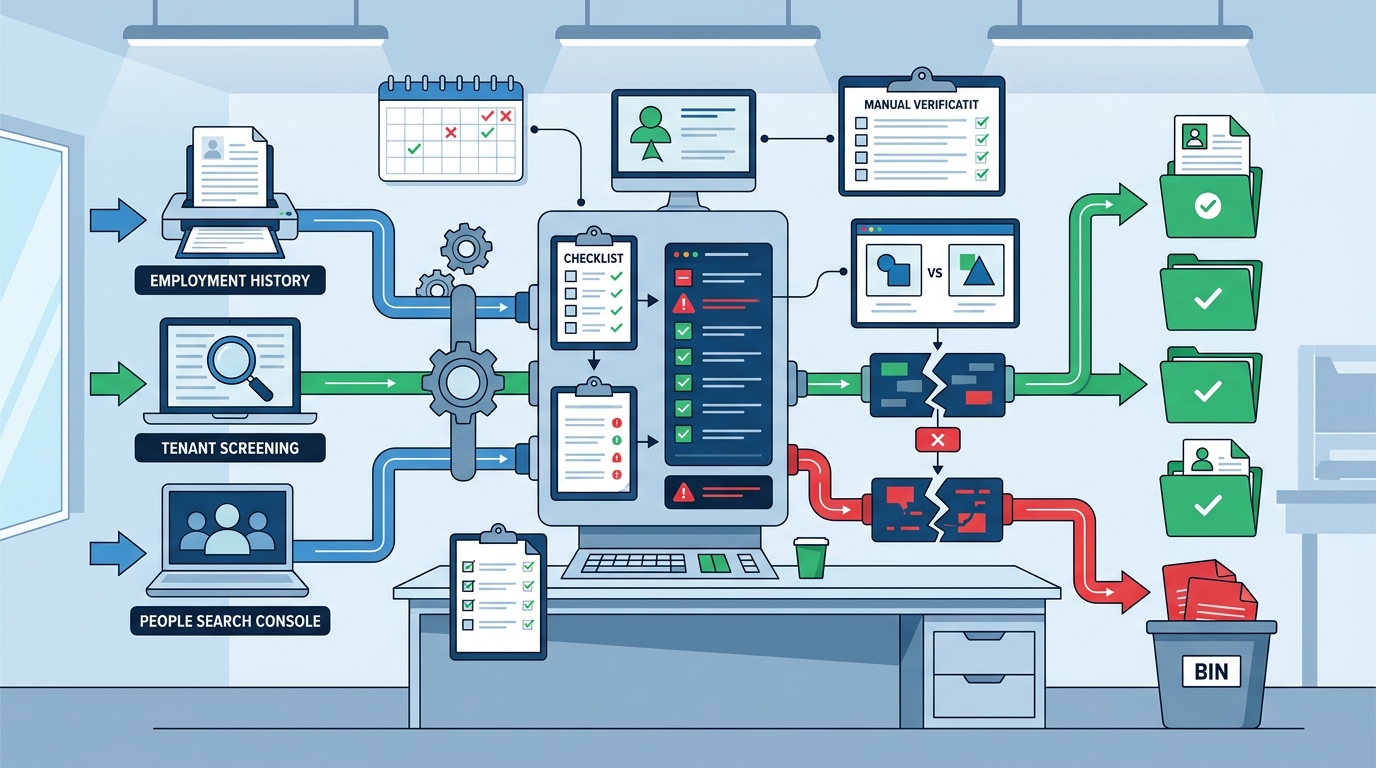
Human judgment plays a significant role in interpreting background check results, which introduces the risk of unconscious bias. Recruiters may interpret ambiguous information differently based on their own prejudices or stereotypes. For example, a minor traffic violation might be overlooked for one candidate but viewed as a character flaw for another. This inconsistency can lead to discriminatory hiring practices.
To mitigate bias, employers should establish clear, objective criteria for evaluating background check results. This includes defining what constitutes a disqualifying offense for each role. For instance, a conviction for embezzlement might be disqualifying for a finance role but irrelevant for a creative position. Standardizing the evaluation process ensures that all candidates are judged by the same metrics.
Training hiring managers on bias awareness is also essential. Workshops on unconscious bias can help recruiters recognize their own tendencies and make more objective decisions. Additionally, using automated screening tools can help reduce human error by flagging only relevant results for human review. However, these tools must be regularly audited to ensure they do not perpetuate existing biases.
Mismanaging the Adverse Action Process
The adverse action process is a critical legal requirement when denying employment based on a background check. Many employers fail to follow the two-step process correctly. The first step is the pre-adverse action notice, which includes the background report and a summary of rights. The second step is the final adverse action notice, sent after a waiting period, confirming the decision to withdraw the offer.
Skipping the waiting period is a common error. Employers must give the candidate a reasonable amount of time, typically five business days, to respond to the pre-adverse action notice. This allows the candidate to dispute inaccuracies or provide context for the findings. Rushing this process can lead to legal challenges and damaged relationships with potential hires.
Another mistake is failing to document the final decision. Employers must provide a written notice of the final adverse action, including the name and contact information of the consumer reporting agency. This notice must also state that the agency did not make the decision and cannot provide specific reasons for it. Proper documentation is essential for defending against future claims of discrimination or non-compliance.
Choosing the Right Verification Partner
Not all background check providers are created equal. Some vendors may lack the necessary compliance infrastructure or data accuracy. Choosing a partner that is NAOC (National Association of Office Counsel) certified or adheres to the FCRA is crucial. These certifications indicate that the vendor follows strict industry standards for data handling and reporting.
Speed and accuracy are also key factors. A vendor that provides slow or inaccurate results can delay the hiring process and lead to poor decisions. Look for providers that offer real-time data updates and comprehensive search capabilities. Additionally, consider the vendor's customer support. A responsive support team can help resolve issues quickly and ensure compliance.
Cost is another consideration, but it should not be the primary driver. The cheapest option may lack the necessary features or compliance safeguards. Instead, focus on the value provided by the vendor. A reliable partner can help you avoid costly legal mistakes and streamline your hiring process. Evaluate vendors based on their track record, technology, and customer reviews.
Key Takeaways
- Compliance is Non-Negotiable: Adhering to the FCRA, EEOC guidelines, and local "Ban the Box" laws is essential to avoid legal penalties and discrimination claims.
- Authorization is Critical: Always obtain written, standalone consent from candidates before initiating any background check.
- Scope Must Be Role-Specific: Tailor the depth and type of background check to the specific requirements and risks of the job position.
- Data Security is Paramount: Protect candidate data with encryption, restricted access, and secure retention policies to prevent breaches.
- Bias Mitigation Requires Structure: Use objective criteria and training to ensure consistent and fair evaluation of background check results.
- Adverse Action Must Be Documented: Follow the two-step adverse action process precisely, including mandatory waiting periods and written notices.
- Vendor Selection Matters: Choose a certified, reliable partner that offers accurate, timely, and compliant screening services.
Frequently Asked Questions
What is the Fair Credit Reporting Act (FCRA)?
The Fair Credit Reporting Act (FCRA) is a federal law that regulates the collection, dissemination, and use of consumer information, including background checks for employment purposes. It mandates specific procedures for employers and consumer reporting agencies to ensure accuracy and fairness.
How long should employers keep background check records?
Employers are generally required to retain background check records and related documentation for at least five years. This retention period allows for audits and legal defense against future claims. Specific requirements may vary by jurisdiction.
Can employers deny employment based on a criminal record?
Employers can deny employment based on a criminal record if it is job-related and consistent with business necessity. However, blanket bans on criminal records are often illegal under EEOC guidance and local laws. Each case must be evaluated individually.
What is the adverse action process?
The adverse action process is a legal requirement when denying employment based on a background check. It involves two steps: a pre-adverse action notice giving the candidate a chance to respond, and a final adverse action notice confirming the decision.
Why is data security important in background checks?
Data security is crucial because background checks involve sensitive personal information. Mishandling this data can lead to identity theft for candidates and significant liability for employers. Secure storage and transmission protocols are essential to protect this information.
How can employers reduce bias in background check reviews?
Employers can reduce bias by establishing clear, objective evaluation criteria, training hiring managers on unconscious bias, and using standardized processes for all candidates. Consistent application of rules helps ensure fair treatment.
What should I look for in a background check vendor?
Look for vendors that are FCRA compliant, NAOC certified, and offer accurate, timely results. Additionally, consider their data security practices, customer support, and ability to handle complex, multi-state screenings.
Secure Your Hiring Process
Avoiding common mistakes in background checks requires diligence, compliance, and the right tools. By understanding the legal framework, defining clear scopes, and choosing a reliable partner, you can protect your organization from risk and hire with confidence. 2verifi offers comprehensive background check solutions designed to streamline your verification process while ensuring strict adherence to all regulatory requirements. Visit 2verifi.com to learn more about our services and schedule a consultation today.