

Employers face significant legal and operational risks when hiring without proper due diligence. Criminal background checks are a critical component of the recruitment process, ensuring workplace safety and compliance with federal and state regulations. At 2verifi, we help organizations navigate these complex requirements by providing accurate and reliable screening data. This guide outlines the seven most important steps to execute a compliant and effective criminal history search. For additional details, review the 2verifi com.
1. Obtain Explicit Written Consent
Compliance begins with a clear, standalone disclosure and authorization form. Under the Fair Credit Reporting Act (FCRA), employers must provide a clear and conspicuous disclosure that a consumer report may be obtained. This document must be separate from the application. Candidates must sign this form before any screening begins. Failure to obtain proper consent can result in significant legal liability and fines.
2. Verify Candidate Identity
Accurate identity matching prevents false positives and missed records. Identity verification is among the first technical step in any background check. It involves matching the candidate's name, date of birth, and Social Security Number against reliable data sources. This step ensures that the criminal records retrieved belong to the specific applicant and not a different individual with a similar name. 2verifi utilizes robust identity resolution technology to minimize errors in this critical phase.
3. Search Federal and State Records
4. Review Sex Offender Registries
Registry checks are mandatory for many industries and roles. The National Sex Offender Public Website (NSOPW) aggregates data from many 50 states and territories. Employers in education, healthcare, and child care must verify candidates against these registries. Some states have additional requirements for specific job titles. This step is distinct from general criminal history and often requires separate reporting.
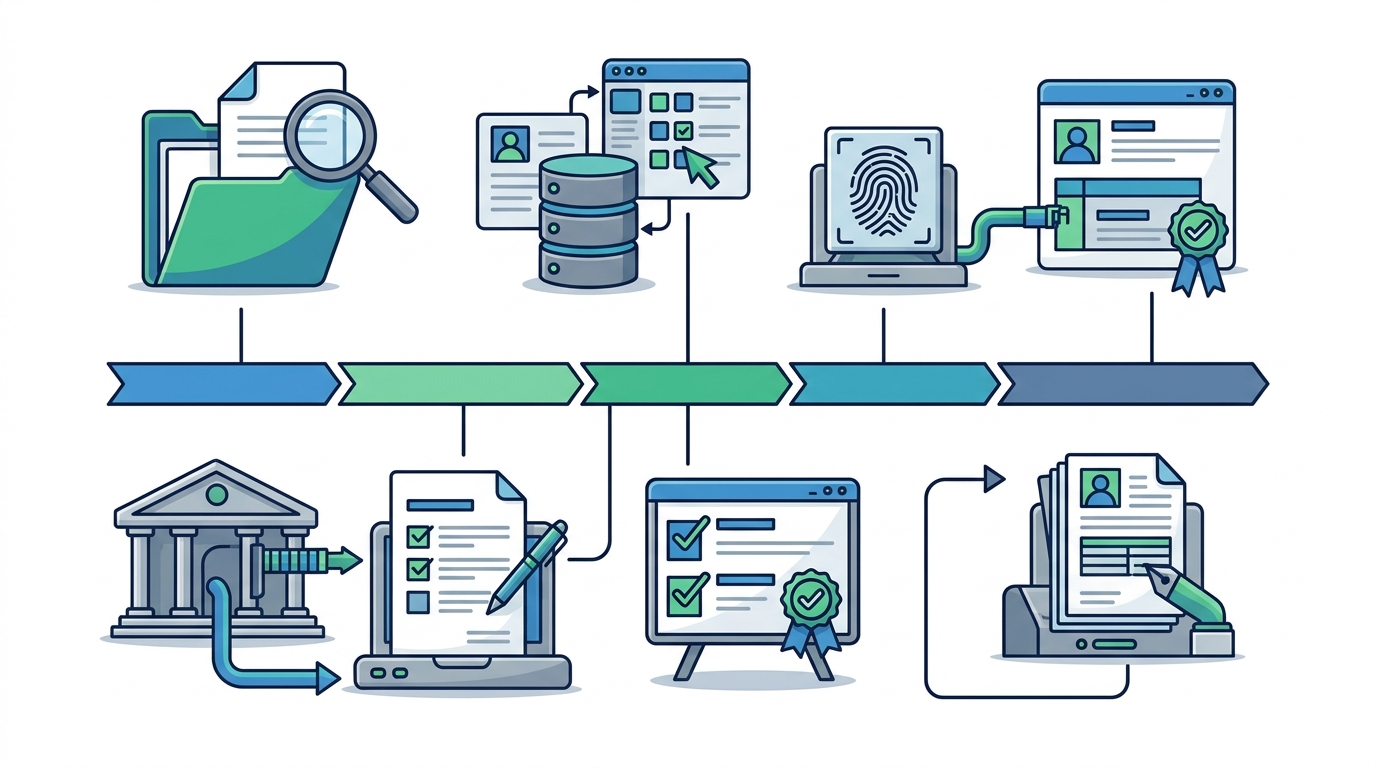
5. Analyze the Nature and Age of Offenses
Context matters more than the mere presence of a record. When a record is found, employers must evaluate the severity, recency, and relevance of the offense to the job duties. A minor traffic violation from ten years ago is generally less relevant than a recent financial crime for a banking role. This analysis must be documented to demonstrate a fair and consistent decision-making process. Blindly rejecting candidates based on any record can lead to disparate impact claims.
6. Issue an Adverse Action Notice
7. Maintain Records and Ensure Data Security
Proper retention and disposal protect both the employer and the candidate. Background check reports contain sensitive personal information. Employers must store these documents securely and dispose of them according to legal retention schedules. Data breaches can lead to severe penalties and reputational damage. 2verifi ensures that all data is handled in compliance with privacy standards, providing employers with peace of mind regarding data security.
Choosing the Right Approach
Selecting the right screening strategy depends on your industry, location, and risk tolerance. For most employers, a balanced approach that prioritizes identity accuracy and jurisdictional coverage is essential. Partnering with a specialized provider like 2verifi ensures that your process is not only compliant but also efficient and accurate.
Frequently Asked Questions
How long can an employer keep a criminal record on file?
Generally, criminal records can be reported for seven years, with exceptions for certain high-level positions or specific offenses. Employers should consult local laws to determine specific retention requirements for their industry.
Is it legal to ask about criminal history on an application?
Many jurisdictions have "ban the box" laws that prohibit asking about criminal history on initial applications. Employers must check local and state regulations to ensure compliance with these specific restrictions.
What is among the difference between a fingerprint-based check and a name-based check?
Fingerprint-based checks are generally more accurate and are required for certain federal positions. Name-based checks are faster and less expensive but may have a higher rate of false positives due to name similarities.
Can a candidate dispute a background check result?
Yes, candidates have the right to dispute inaccuracies with the consumer reporting agency. They can also provide context or documentation to the employer during the pre-adverse action period. Learn more: 2verifi com.