

Trucking companies face strict federal mandates to ensure road safety and regulatory adherence. 2verifi helps fleets navigate these complex requirements by providing accurate background check services that align with Department of Transportation (DOT) standards. Understanding these core obligations is essential for maintaining a compliant and safe workforce. For additional details, review the 2verifi com.
1. Pre-Employment Background Checks
Verify criminal history before hiring. The Federal Motor Carrier Safety Administration (FMCSA) requires carriers to conduct background checks on new drivers. This process ensures that individuals with certain disqualifying offenses are not placed behind the wheel of commercial motor vehicles. 2verifi provides comprehensive screening tools to help you verify candidate histories efficiently.
2. Drug and Alcohol Testing Program
3. Driver Medical Certification
Ensure physical fitness for duty. Every commercial driver must hold a valid Medical Examiner's Certificate (MEC). This certification confirms that the driver meets the physical and mental health standards required to operate safely. Carriers are responsible for verifying that these certificates are current and valid before allowing a driver to operate a vehicle.
4. Commercial Driver's License (CDL) Verification
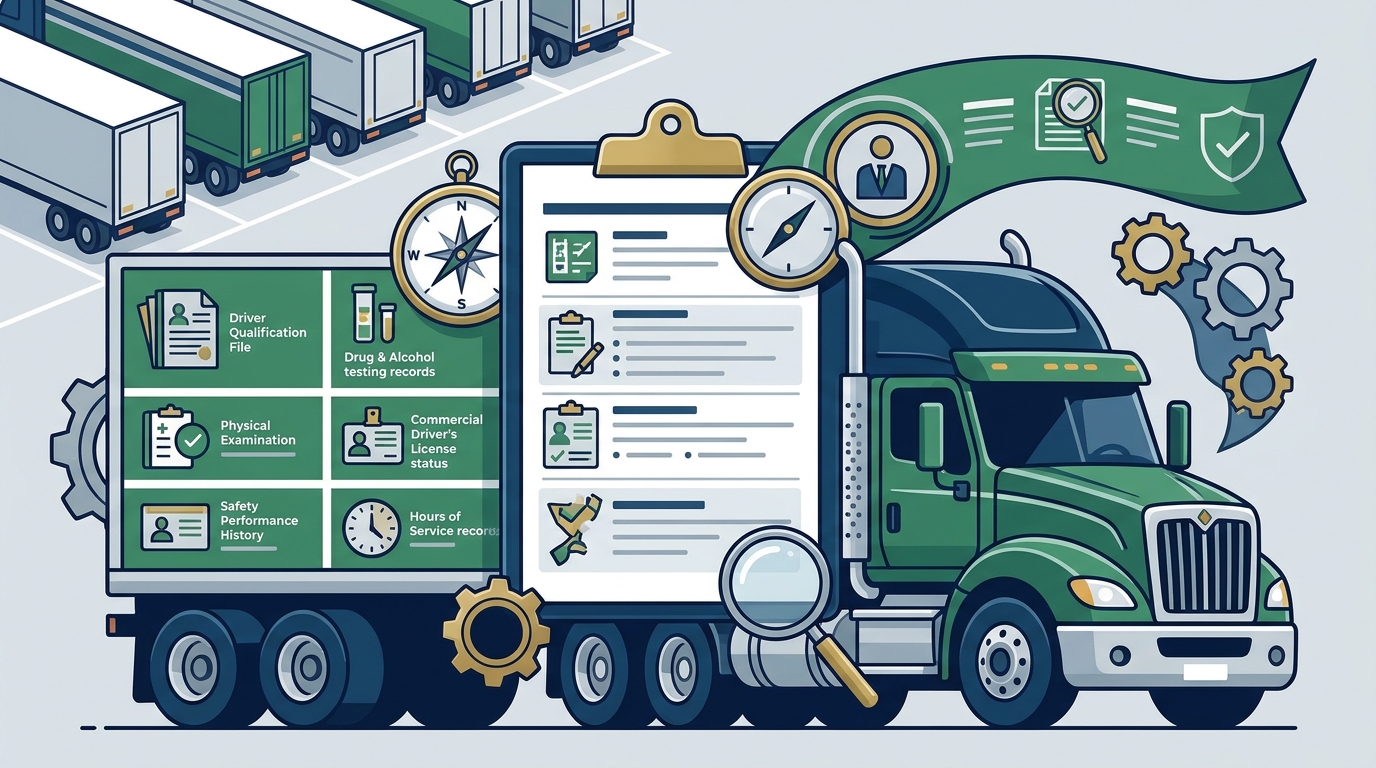
5. Driver Qualification File (DQF) Maintenance
6. Annual Driver Review
Conduct yearly performance evaluations. Carriers must perform an annual review of each driver's qualification file. This review assesses the driver's performance, safety record, and any changes in their status. It is a critical step in identifying potential risks and ensuring ongoing compliance with safety regulations.
7. Substance Abuse Professional (SAP) Referral
Manage return-to-duty processes. If a driver fails a drug or alcohol test, they must be removed from safety-sensitive functions. They can only return to duty after completing a referral to a Substance Abuse Professional (SAP) and passing a follow-up test. This process ensures that drivers who have violated testing rules receive appropriate evaluation and treatment.
Frequently Asked Questions
How often must trucking companies conduct background checks?
Background checks are primarily required at the pre-employment stage. However, carriers should also monitor for new criminal convictions that may disqualify a driver from operating a commercial vehicle. Regular reviews help ensure ongoing compliance with safety standards.
What is a Driver Qualification File?
Can 2verifi help with DOT compliance?
What happens if a driver fails a drug test?
If a driver fails a drug or alcohol test, they must be immediately removed from safety-sensitive functions. They cannot return to duty until they complete a referral to a Substance Abuse Professional (SAP) and pass a follow-up test. This process ensures that drivers who have violated testing rules receive appropriate evaluation and treatment.
How long must Driver Qualification Files be kept?
Driver Qualification Files must be maintained for the duration of the driver's employment. After termination, the file must be kept for at least three years. This retention period ensures that records are available for inspection by regulatory authorities if needed. Learn more: 2verifi com.