
Employment fraud remains a critical vulnerability for organizations worldwide, with background check failures affecting a significant portion of the hiring pipeline. Recent industry data indicates that approximately 85% of resumes contain some form of intentional or unintentional misrepresentation, making rigorous verification a non-negotiable step in modern recruitment. According to the Association of Certified Fraud Examiners, occupational fraud costs organizations an average of 5% of annual revenue, highlighting the financial imperative of accurate candidate screening. This guide details the legal, operational, and technical frameworks required to verify employment history effectively while maintaining compliance and candidate trust.
Why Verify Employment History?
Verifying employment history is not merely a procedural checkbox. It is a strategic risk management tool that protects organizational integrity, safety, and financial stability. When candidates inflate titles, fabricate dates, or hide terminations, they introduce unvetted variables into your workforce. This can lead to decreased productivity, cultural misalignment, and potential liability issues.
The primary goal of employment verification is to confirm the authenticity of a candidate's professional claims. This includes validating job titles, dates of employment, responsibilities, and reasons for leaving. By cross-referencing candidate-provided information with official records, employers can distinguish between high-performing professionals and those who rely on deception to advance their careers. For businesses seeking reliable, automated solutions, exploring employment verification services can streamline this complex process significantly.
Furthermore, accurate verification supports regulatory compliance in industries such as finance, healthcare, and government contracting. Many jurisdictions require proof of past employment for licensing and bonding purposes. Failing to conduct these checks can result in severe penalties, loss of contracts, or revocation of operating licenses. Therefore, establishing a robust verification protocol is essential for long-term operational resilience.
Legal Compliance and Consent
Navigating the legal landscape of employment verification requires strict adherence to federal and state regulations. The Fair Credit Reporting Act (FCRA) is the cornerstone of consumer protection in this domain. It governs how background check information is collected, used, and shared by consumer reporting agencies. Under the FCRA, employers must obtain written consent from candidates before initiating any background check. This consent must be a standalone document, clearly distinguishing it from the employment application itself.
Additionally, the FCRA mandates specific procedures if an employer decides to take adverse action based on the report. This includes providing a pre-adverse action notice, a copy of the report, and a summary of rights to the candidate. Employers must wait a reasonable period before issuing a final adverse action notice. Failure to follow these steps can result in significant legal liabilities and financial penalties.
State laws often impose additional requirements beyond the FCRA. For instance, "ban the box" laws in certain jurisdictions restrict when employers can inquire about criminal history, though employment verification typically remains permissible. It is crucial to consult legal counsel to ensure your verification policies align with local regulations. Understanding these nuances protects your organization from litigation and ensures a fair hiring process for all applicants.
Methods for Verifying Employment
Employers have several methods at their disposal to verify employment history. Each method varies in accuracy, speed, and cost. Understanding these options allows HR teams to select the most appropriate approach for their specific needs.
Direct Employer Contact
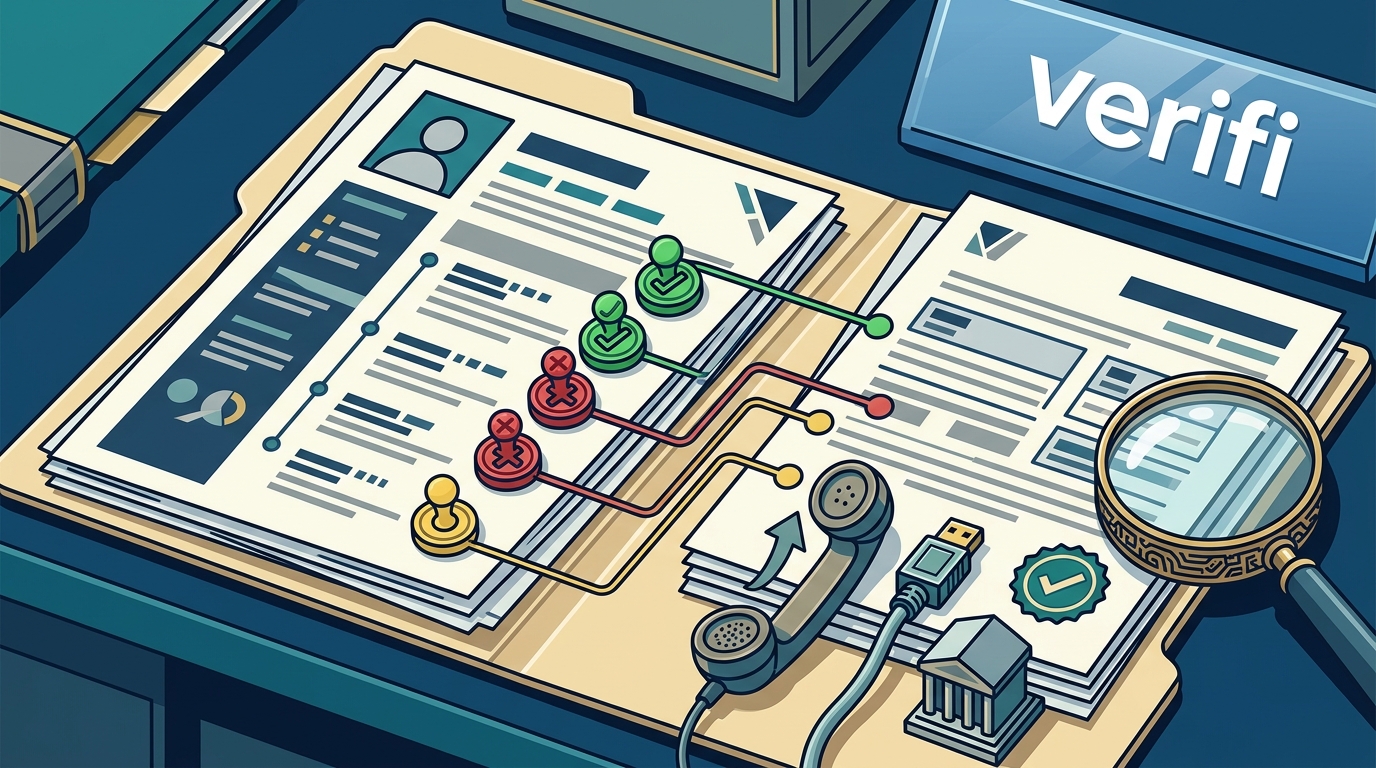
The most traditional method involves contacting the candidate's previous employers directly. This can be done via phone, email, or mail. While this method provides direct insight, it is often unreliable. Many companies have strict policies that only confirm dates of employment and job titles to avoid liability. Human resources departments may also be understaffed, leading to delayed responses or lost inquiries. Consequently, this method often yields incomplete data.
Third-Party Verification Agencies
Using a third-party verification agency is the most efficient and reliable method for most organizations. These agencies specialize in collecting and validating employment data from various sources, including government databases, credit bureaus, and direct employer contacts. They utilize advanced technology to automate the process, ensuring faster turnaround times and higher accuracy. For example, platforms like 2verifi offer comprehensive verification solutions that reduce manual workload and enhance data integrity.
Candidate-Provided Documentation
Sometimes, employers request documentation directly from candidates, such as pay stubs, tax forms, or offer letters. While this provides tangible proof, it is susceptible to forgery. Candidates can easily alter digital documents or create fake records. Therefore, this method should be used as a supplementary check rather than the primary source of verification. It is best suited for verifying specific details like salary history, where direct employer confirmation is not available.
Choosing the Right Verification Partner
Selecting a verification provider requires careful evaluation of their capabilities, compliance standards, and technological infrastructure. The right partner should offer a seamless integration with your existing Applicant Tracking System (ATS). This ensures that verification requests are triggered automatically upon candidate submission, reducing administrative overhead.
Consider the following criteria when evaluating potential partners:
| Feature | Description | Importance |
|---|---|---|
| Automated Data Collection | Ability to pull data from multiple sources automatically. | High |
| FCRA Compliance | Adherence to federal reporting and consent laws. | Critical |
| Turnaround Time | Speed of delivering verification results. | Medium |
| Data Security | Encryption and protection of sensitive candidate data. | Critical |
Additionally, look for providers that offer robust customer support and transparent reporting. The ability to generate detailed audit trails is essential for demonstrating compliance during legal reviews. A provider with a strong reputation for accuracy and reliability will save your HR team time and reduce the risk of hiring errors. For organizations prioritizing speed and accuracy, automated employment verification is a superior choice over manual processes.
Best Practices for HR Teams
Implementing a successful employment verification strategy requires more than just selecting a tool. It demands a structured approach that integrates verification into the broader hiring workflow. Here are key best practices for HR professionals.
First, establish clear policies regarding what information is verified. Define the scope of verification for different roles. For example, executive positions may require deeper background checks, including reference checks and financial history, while entry-level roles may only need basic employment confirmation. Standardizing these policies ensures consistency and fairness across the organization.
Second, communicate transparently with candidates. Inform applicants early in the process that employment verification will be conducted. Provide clear instructions on how to authorize the check and what information is required. Transparency builds trust and reduces candidate anxiety. It also ensures that candidates are prepared to provide necessary documentation, such as contact information for previous employers.
Third, regularly audit your verification processes. Review the accuracy of reports and the efficiency of your verification partners. Identify any bottlenecks or areas for improvement. Continuous improvement ensures that your verification strategy remains effective and compliant with evolving regulations. By staying proactive, you can mitigate risks and enhance the overall quality of your hiring decisions.
Key Takeaways
- Prevalence of Misrepresentation: Approximately 85% of resumes contain some form of misrepresentation, making verification critical.
- Financial Impact: Occupational fraud costs organizations an average of 5% of annual revenue, according to the Association of Certified Fraud Examiners.
- FCRA Compliance: Written consent is mandatory before conducting background checks under the Fair Credit Reporting Act.
- Adverse Action Procedures: Employers must provide pre-adverse and final adverse action notices if using verification data to deny employment.
- Third-Party Efficiency: Automated verification agencies offer higher accuracy and faster turnaround times than manual methods.
- Data Security: Protecting candidate data through encryption and secure storage is a legal and ethical obligation.
- Strategic Integration: Verification should be integrated into the ATS to streamline the hiring workflow and reduce administrative burden.
Frequently Asked Questions
How long does employment verification take?
Employment verification typically takes between 24 to 72 hours when using automated third-party services. Manual verification via direct employer contact can take several days or weeks, depending on the responsiveness of the previous employer's human resources department. Automated systems leverage digital databases to expedite this process significantly.
Can I verify employment without the candidate's consent?
No, you cannot verify employment history without the candidate's explicit written consent. The Fair Credit Reporting Act (FCRA) requires a standalone disclosure and authorization form before any background check is initiated. Violating this requirement can result in severe legal penalties and lawsuits.
What information is typically verified?
Standard employment verification includes confirming job titles, dates of employment, and sometimes salary history. Some verifications may also include verifying eligibility for rehire and reasons for leaving. The scope of verification depends on the employer's policies and the specific requirements of the role.
What happens if a previous employer does not respond?
If a previous employer does not respond, verification agencies may attempt alternative methods, such as checking public records or using other data sources. However, incomplete verification may require additional steps, such as requesting documentation from the candidate. It is important to document all attempts to verify to demonstrate due diligence.
Is employment verification required by law?
Employment verification is not universally required by federal law for all positions. However, it is mandated for specific roles in regulated industries such as finance, healthcare, and government contracting. Additionally, many employers require it as a standard policy to mitigate risk and ensure hiring integrity.
How do I handle discrepancies in employment history?
If discrepancies are found, follow your organization's adverse action procedures. Provide the candidate with a copy of the report and an opportunity to explain or dispute the information. If the discrepancy is confirmed as fraudulent, you may choose to withdraw the job offer. Document all steps taken to ensure compliance and legal protection.
Can I verify employment for international candidates?
Yes, but the process is more complex due to varying data privacy laws and record-keeping practices in different countries. Specialized verification providers with global networks are essential for accurately verifying international employment history. They navigate local regulations and cultural nuances to ensure accurate results.
Start Your Verification Process
Securing your workforce starts with accurate information. Don't leave your hiring process to chance. Partner with a trusted verification provider to ensure compliance, accuracy, and efficiency. Visit 2verifi.com to learn how our automated solutions can streamline your employment verification process and protect your organization from hiring risks. Take the first step toward a more secure and reliable hiring pipeline today.