
Can I Verify Employment History for New Hires?
Employment verification is a critical step in the hiring process that protects your organization from fraud and liability. According to recent industry data, approximately 85% of resumes contain some form of intentional or unintentional misrepresentation, making background checks an essential safeguard for modern businesses. This guide explains how to conduct these checks legally and effectively.
Why Verify Employment History?
Verifying past employment is not just about confirming dates. It is about validating the candidate's actual role, responsibilities, and performance. When you verify employment history, you reduce the risk of hiring someone who has inflated their qualifications or fabricated their work experience.
Resume fraud costs employers billions annually. By implementing a robust verification process, you ensure that your new hires possess the skills they claim to have. This protects your team's productivity and maintains the integrity of your company culture.
Additionally, verification helps identify potential red flags. If a candidate cannot account for gaps in their resume or provides inconsistent information, it may indicate deeper issues. Early detection of these problems saves time and resources in the long run.
Legal Compliance and FCRA
Employment verification is heavily regulated to protect candidate privacy. The Fair Credit Reporting Act (FCRA) is the primary federal law governing these checks. The FCRA sets strict guidelines for how employers must handle background check information.
Before conducting a verification, you must obtain written consent from the candidate. This consent must be a standalone document, clearly explaining the purpose of the check. Failure to secure proper consent can result in significant legal penalties.
If you decide not to hire a candidate based on information found in a background check, you must follow specific adverse action procedures. This includes providing a pre-adverse action notice, a copy of the report, and a summary of rights. Only after this process can you issue a final adverse action notice.
Understanding these legal requirements is crucial for any HR professional. Non-compliance can lead to lawsuits and damage your company's reputation. Always consult with legal counsel to ensure your processes meet current standards.
The Verification Process
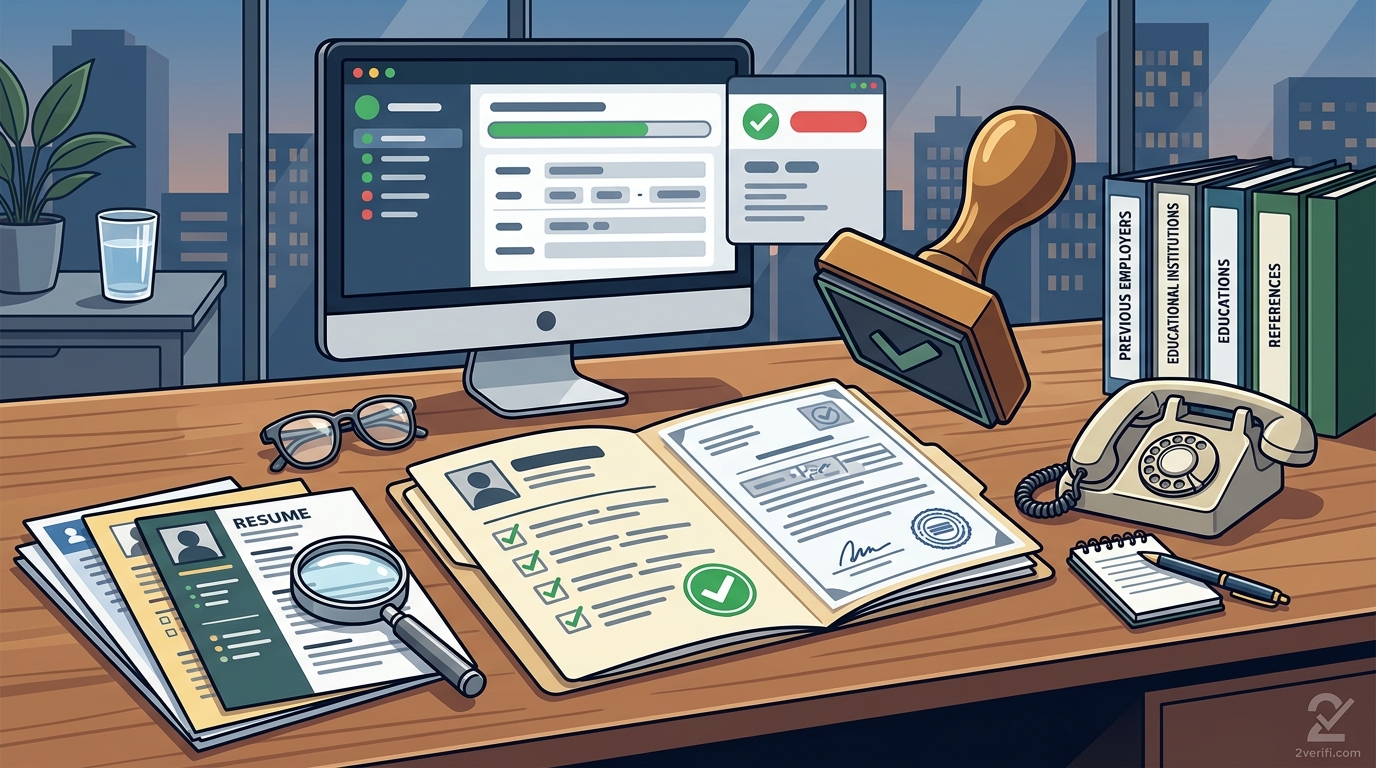
Conducting employment verification involves several steps. First, you collect the candidate's information, including previous employers, job titles, and dates of employment. Next, you contact the previous employers or use a third-party service to confirm these details.
Direct contact with previous employers can be time-consuming and may yield inconsistent results. Many human resources departments have policies that only confirm dates of employment and job titles. This is why using a specialized service is often more efficient.
Third-party verification services use automated systems to cross-reference data with public records and employer databases. These services provide a comprehensive report that includes employment history, education verification, and criminal background checks. 2verifi offers streamlined verification solutions to help you manage this process effectively.
When reviewing the verification report, look for discrepancies between the candidate's resume and the confirmed data. Pay attention to gaps in employment and reasons for leaving. These details provide valuable context for your hiring decision.
Tools and Services
Choosing the right verification tool depends on your company's size and needs. Small businesses may prefer cost-effective, automated platforms. Large enterprises might require customizable, enterprise-grade solutions.
| Service Type | Best For | Key Features |
|---|---|---|
| Automated Platforms | Startups and SMBs | Fast turnaround, low cost, basic checks |
| Enterprise Solutions | Large Corporations | Custom workflows, API integration, global coverage |
| Specialized Services | Regulated Industries | Deep background checks, compliance focus |
Automated platforms like 2verifi simplify the verification process by integrating directly with your applicant tracking system. This reduces manual data entry and speeds up the hiring timeline.
Enterprise solutions offer greater flexibility and control. They can handle complex verification needs, such as international checks and specialized industry requirements. These solutions often include dedicated support teams to assist with compliance issues.
Specialized services are ideal for industries with strict regulatory requirements, such as healthcare and finance. These services ensure that all checks meet specific legal standards, reducing your risk of non-compliance.
Key Takeaways
- Resume fraud is prevalent, with approximately 85% of resumes containing inaccuracies.
- The Fair Credit Reporting Act (FCRA) mandates written consent and adverse action notices.
- Direct employer contact may be limited, making third-party services more reliable.
- Automated platforms offer speed and cost-efficiency for small to medium businesses.
- Enterprise solutions provide customization and global coverage for large organizations.
- Compliance is non-negotiable; always follow legal guidelines for background checks.
- Verification protects your company from liability and ensures hire quality.
Frequently Asked Questions
How long does employment verification take?
Verification typically takes 24 to 48 hours for standard checks. Complex cases or international verifications may take longer.
Can I verify employment without candidate consent?
No, you must obtain written consent from the candidate before conducting any background check under the FCRA.
What information can employers legally provide?
Many employers only confirm job titles and dates of employment. Some may provide additional details if authorized by the candidate.
Is it legal to ask candidates about past employment?
Yes, but you must follow specific guidelines regarding how and when you ask these questions to avoid discrimination claims.
What happens if a candidate fails verification?
If a candidate fails verification, you must follow adverse action procedures, including providing notice and an opportunity to dispute the findings.
Do I need a third-party service for verification?
While you can conduct verification in-house, third-party services offer greater accuracy, compliance support, and efficiency.
How do I choose the right verification service?
Consider your company size, budget, and specific compliance needs. Evaluate services based on their coverage, speed, and integration capabilities.
Start Verifying with Confidence
Securing the right talent starts with accurate verification. Don't leave your hiring process to chance. Visit 2verifi.com today to learn how our comprehensive background check solutions can streamline your hiring workflow and protect your organization. Take the first step toward a safer, more reliable hiring process now.