

Employers and landlords in the United States rely on background checks to mitigate risk, yet the process is fraught with legal and operational pitfalls. According to recent industry data, nearly 60% of employers admit to making errors during the screening process, which can lead to costly lawsuits and missed talent. This statistic highlights the critical need for precision in every step of the verification workflow. Failing to understand the nuances of the Fair Credit Reporting Act (FCRA) or misinterpreting criminal records can result in severe compliance violations. The following guide outlines the most frequent errors and provides actionable strategies to ensure your screening process is both legally sound and operationally efficient. (Maryland Today Study)
Understanding FCRA Compliance
The Fair Credit Reporting Act is the federal law that governs how consumer information is collected and used. Many organizations mistakenly believe that background checks are purely internal matters. This assumption is dangerous. The FCRA imposes strict obligations on both the consumer reporting agency and the entity requesting the report.
FCRA is a federal statute regulating the collection, dissemination, and use of consumer information. One of the most common mistakes is failing to obtain proper written consent from the candidate or tenant before initiating a check. Without explicit authorization, you are violating federal law. Another frequent error is confusing the role of the background check provider. If you use a third-party service, they are the consumer reporting agency, and you are the end user. Both parties have distinct responsibilities.
For instance, the end user must ensure that the information obtained is used only for permissible purposes. Using a background check for hiring decisions without a legitimate business reason is a direct violation. Furthermore, the accuracy of the report is paramount. If the data is incorrect, the end user has a duty to investigate. Ignoring this duty can lead to liability for negligent hiring or screening. To navigate these complexities, it is essential to partner with a reputable provider like 2verifi who understands the regulatory landscape. (Maryland Today Study)
Data Accuracy and Source Verification
Not all background check services are created equal. A significant error is relying on free or low-cost aggregators that pull data from unverified sources. These platforms often scrape public records without validating the information against court documents. This leads to false positives, where a person is flagged for an incident that never happened or was expunged.
Data accuracy is the cornerstone of a defensible screening process. When a report contains errors, it can unfairly disqualify qualified candidates. For example, a common mistake is misinterpreting a "similar name" match as a direct hit. Without proper verification, you might reject a candidate based on the criminal history of someone else with the same name. This is particularly risky in areas with common surnames.
To avoid this, you must ensure your provider uses primary source verification. This means checking directly with county courts, federal databases, and educational institutions. According to data from the National Employment Law Institute, the accuracy of criminal records varies significantly by state due to differences in digitization efforts. States with older, less digitized records may have more gaps or errors. Therefore, relying on a single national database is insufficient. You need a provider that conducts multi-jurisdictional searches and validates findings. Visit NELI for more insights on employment law compliance.
Adverse Action Procedure Errors
One of the most litigated areas in background screening is the adverse action process. If you decide to deny employment or housing based on information in a background check, you must follow a strict two-step procedure. Many employers skip steps or get the order wrong, leading to legal penalties.
The first step is the Pre-Adverse Action notice. You must provide the candidate with a copy of the background check report and a summary of their rights under the FCRA. This gives them a chance to review the information and dispute any inaccuracies. Ignoring this step is a critical error. It denies the candidate due process and exposes you to liability.
The second step is the Final Adverse Action notice. You must wait a reasonable amount of time after the pre-adverse notice before making a final decision. This waiting period allows the candidate to correct errors. Only after this period can you issue the final notice. This notice must include the name, address, and phone number of the consumer reporting agency. It must also state that the agency did not make the decision and cannot explain it. Failing to include this specific information is a common compliance failure. For detailed guidance on adverse action protocols, refer to the Federal Trade Commission's compliance guide.
Ignoring Jurisdictional Ban-the-Box Laws
Background check regulations are not just federal; they are also highly localized. Many cities and states have enacted "Ban-the-Box" laws that restrict when and how employers can ask about criminal history. A major mistake is applying a one-size-fits-all screening policy across all locations.
In jurisdictions with Ban-the-Box laws, you may be prohibited from asking about criminal history on the initial job application. You might also be restricted from conducting background checks until after a conditional offer has been made. Ignoring these local laws can result in significant fines and legal action. For example, in California, the Fair Chance Act limits when employers can inquire about criminal history. In New York City, similar laws apply to both private and public employers.
To stay compliant, you must map out the specific regulations for every location where you hire. This requires ongoing monitoring of legislative changes. According to the Society for Human Resource Management, over 35 states and numerous cities have enacted some form of Ban-the-Box legislation. This statistic underscores the complexity of national compliance. You need a partner who can help you navigate these local nuances. Explore SHRM's state and local updates to stay informed.
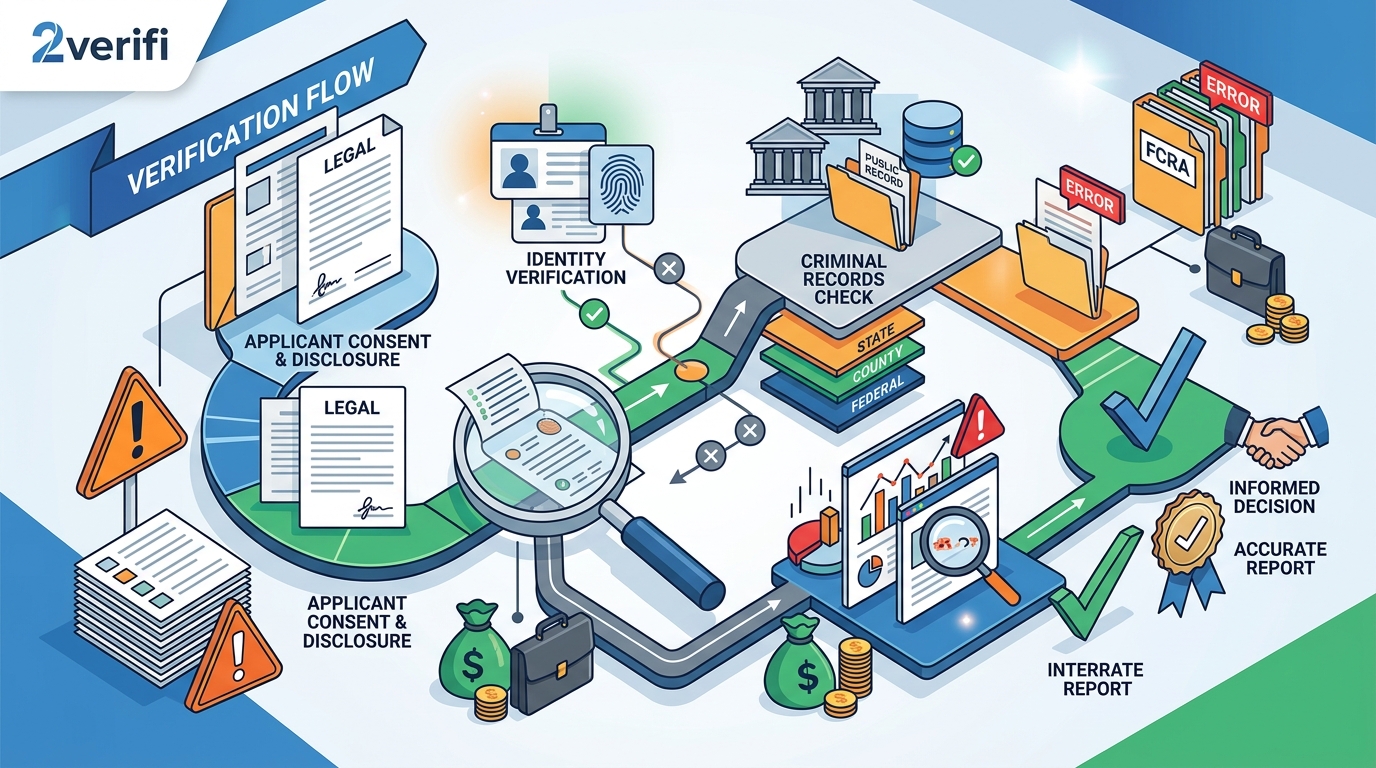
Prioritizing Cost Over Data Depth
It is tempting to choose the cheapest background check service to reduce operational costs. However, this is a false economy. Low-cost services often cut corners on verification, leading to incomplete or inaccurate reports. The cost of a lawsuit or a bad hire far exceeds the savings from a cheaper screening provider.
Data depth is crucial for a comprehensive assessment. A basic name and date of birth search is rarely enough. You need to verify employment history, education credentials, and professional licenses. For roles involving financial responsibility, a credit check may be necessary. For driving roles, a motor vehicle record check is essential. Skipping these checks to save money leaves you vulnerable to risk.
Consider the total cost of ownership. A higher-quality service provides faster turnaround times, better customer support, and more robust compliance tools. These factors contribute to a smoother hiring process and better candidate experience. Investing in a reliable provider like 2verifi services ensures that you get the depth of data you need without compromising on accuracy. For more on the economics of hiring, see Gallup's workplace research.
Overlooking Manual Verification Needs
Automation is powerful, but it is not infallible. A common mistake is relying entirely on automated systems for all verifications. While automation is efficient for large-scale data searches, it often misses nuances that require human judgment. For example, automated systems may struggle to interpret complex legal records or outdated court documents.
Manual verification is essential for critical roles. This involves a specialist reviewing the raw data to ensure accuracy and context. For instance, a criminal record might show an arrest, but not the disposition. Was the case dismissed? Was the person acquitted? Automated systems may flag this as a negative, while a human reviewer can see the full picture. This distinction is vital for making fair and accurate decisions.
Additionally, manual verification helps with identity proofing. Automated systems may match a name and date of birth, but a human can verify additional identifiers like address history or previous names. This reduces the risk of false positives. Combining automated efficiency with manual precision creates the most robust screening process. Learn more about verification best practices at NCSIQ.
Key Takeaways
- FCRA Compliance is Non-Negotiable: Always obtain written consent and follow adverse action procedures strictly to avoid federal penalties.
- Verify Primary Sources: Rely on providers that check court records directly, not just aggregated databases, to ensure accuracy.
- Respect Local Laws: Implement Ban-the-Box policies where required and adjust screening timelines based on jurisdiction.
- Invest in Depth: Prioritize comprehensive data over low cost to mitigate the risk of bad hires and legal liability.
- Use Human Review: Combine automated searches with manual verification for critical roles to catch nuances and errors.
- Document Everything: Keep detailed records of your screening process and decisions to demonstrate compliance if challenged.
- Stay Informed: Regularly update your policies to reflect changes in federal and state employment laws.
Frequently Asked Questions
What is the Fair Credit Reporting Act (FCRA)?
The Fair Credit Reporting Act is a federal law that regulates the collection, dissemination, and use of consumer information, including background checks for employment and housing.
Do I need consent to run a background check?
Yes, you must obtain written consent from the candidate or tenant before initiating a background check. This is a strict requirement under the FCRA.
What is the adverse action process?
The adverse action process involves two steps: a pre-adverse action notice giving the candidate a chance to dispute errors, and a final adverse action notice after the decision is made.
Are Ban-the-Box laws federal?
No, Ban-the-Box laws are primarily state and local regulations. They vary significantly by jurisdiction, so you must check the laws in each area where you hire.
How can I ensure data accuracy?
Ensure data accuracy by using a provider that verifies information from primary sources, such as county courts and educational institutions, rather than relying on aggregated data.
What happens if I make an error in the adverse action process?
Errors in the adverse action process can lead to lawsuits, fines, and reputational damage. It is crucial to follow the procedure exactly as outlined by the FCRA.
Why is manual verification important?
Manual verification is important because it adds a layer of human judgment to catch nuances, errors, and context that automated systems might miss, ensuring a fair and accurate assessment.
Secure Your Hiring Process Today
Avoid the costly mistakes that plague many organizations by partnering with a trusted expert. At 2verifi, we provide comprehensive background check solutions that prioritize accuracy, compliance, and speed. Our team of specialists ensures that every report meets the highest standards of verification and legal adherence. Don't leave your hiring process to chance. Contact us today to learn how we can help you build a safer, more compliant workforce.