

Understanding the Legal Framework
The Fair Credit Reporting Act (FCRA) is a federal law that regulates the collection, dissemination, and use of consumer information. It mandates that background check providers operate as Consumer Reporting Agencies (CRAs) when they furnish reports for employment purposes. Organizations must understand that they are 'users' of these reports, which triggers specific obligations under the statute. Failure to comply can result in civil liability and regulatory penalties. For additional details, review the 2verifi com.
Defining Key Roles
A Consumer Reporting Agency is an entity that assembles and evaluates consumer credit information for sale to third parties. The 'user' is the organization that obtains the report for employment, insurance, or tenant screening purposes. The 'consumer' is the individual about whom the report is prepared. Clear role definition is the first step in compliance. For additional details, review the .
Verifying Provider Certification
Organizations must obtain a written certification from their provider stating that they will comply with all applicable FCRA requirements. This certification is a legal prerequisite before any report is generated. 2verifi provides this certification as part of its onboarding process, ensuring that clients have the necessary documentation for their compliance files. This step protects the organization from vicarious liability for provider errors. For additional details, review the Customer Experience.
The Certification Process
The certification must be specific and unambiguous. It should explicitly reference the FCRA and confirm the provider's adherence to accuracy and integrity standards. Organizations should store these documents securely and review them annually. This practice demonstrates due diligence in the event of an audit or legal challenge. For additional details, review the Frequently Asked Questions.
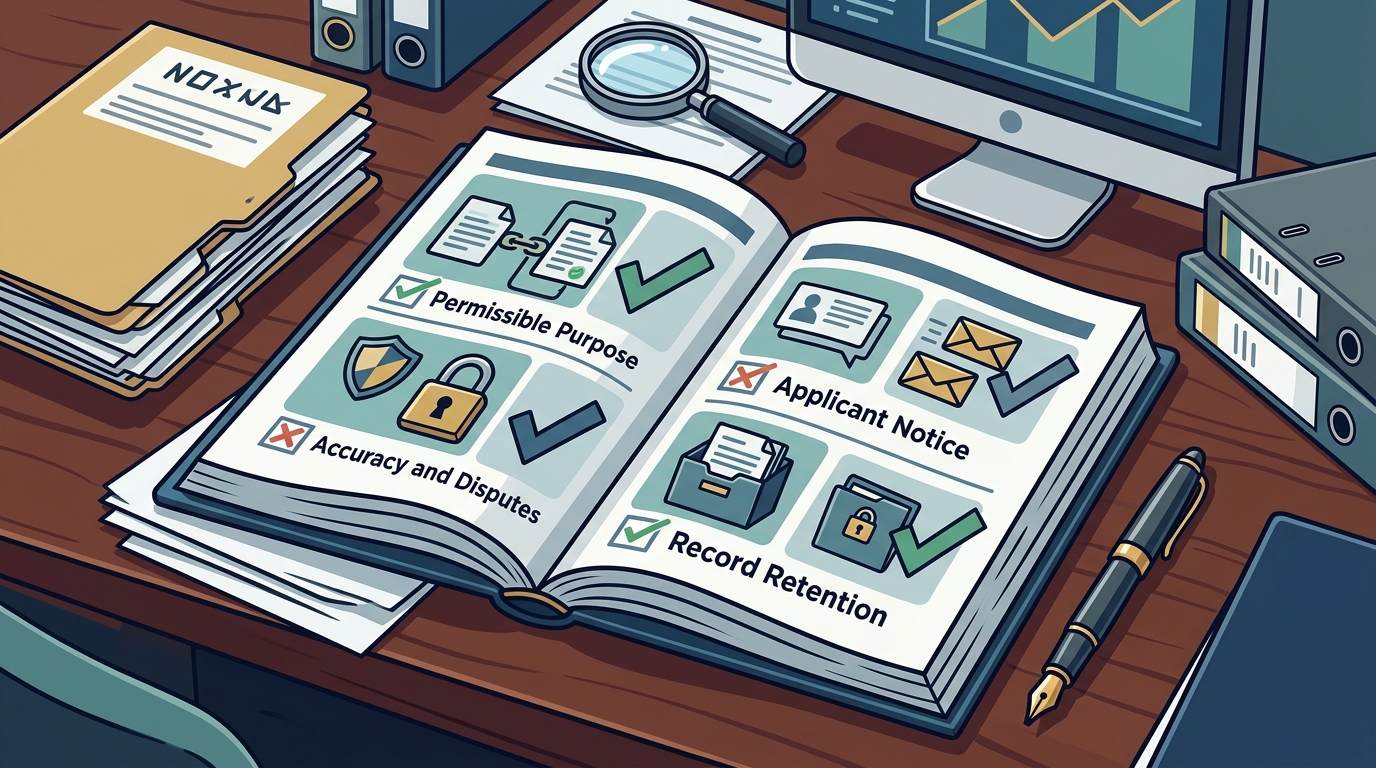
Ensuring Data Accuracy and Integrity
Handling Disputes
If a consumer disputes the accuracy of a report, the provider must reinvestigate the disputed items within a reasonable time frame. Organizations must be aware of this process and inform candidates of their rights. The provider's ability to resolve disputes efficiently is a key indicator of their compliance maturity. Delays in dispute resolution can expose the organization to legal risk. For additional details, review the About.
Implementing Adverse Action Procedures
Pre-Adverse and Final Notices
Monitoring Ongoing Compliance
Internal Audits
Conducting internal audits of the background check process is a best practice. These audits should verify that all FCRA requirements are being met at every stage. They should also assess the provider's performance and responsiveness. Regular audits help identify gaps in the process and allow for timely corrections. This proactive approach reduces the risk of non-compliance.
Key Takeaways
- Verify that your provider is a certified Consumer Reporting Agency (CRA).
- Obtain and store written FCRA compliance certifications from your provider.
- Ensure your provider maintains reasonable procedures for data accuracy.
- Understand and implement proper adverse action notice procedures.
- Monitor your provider's dispute resolution processes regularly.
- Conduct internal audits to ensure ongoing compliance with FCRA.
- Stay updated on regulatory changes affecting background checks.
Frequently Asked Questions
What is the primary responsibility of a background check provider under FCRA?
The primary responsibility is to maintain reasonable procedures to ensure the maximum possible accuracy of the information in the files they maintain and to comply with all applicable FCRA requirements.
Do organizations need to be CRAs to use background checks?
No, organizations are 'users' of the reports. They must ensure their provider is a CRA and that they follow FCRA requirements as users, such as providing adverse action notices.
What happens if a provider is not FCRA compliant?
If a provider is not compliant, the organization may face legal liability for any inaccuracies or procedural failures in the background check process. This can result in lawsuits and regulatory penalties.
How often should organizations review their provider's compliance?
Organizations should review their provider's compliance practices annually and whenever there are significant changes in regulations or the provider's operations.
What is an adverse action notice?
Can organizations be held liable for provider errors?
Yes, organizations can be held liable for provider errors if they fail to follow FCRA requirements, such as providing proper notices or verifying the provider's compliance.
Where can organizations find FCRA compliance resources?
Organizations can find FCRA compliance resources from the Consumer Financial Protection Bureau (CFPB) and through their background check provider, such as 2verifi. Learn more: 2verifi com.