

Employers and landlords face significant risks when skipping thorough vetting processes. According to the National Association of Professional Background Screeners, approximately 85% of employers conduct background checks on candidates, yet many still encounter fraud due to inadequate verification methods. This statistic highlights the critical need for robust screening protocols that go beyond surface-level data aggregation. In an era where identity theft and resume inflation are rampant, relying on unverified sources can lead to costly legal liabilities and operational failures. Understanding the mechanics of reliable background checks is not just a best practice; it is a fundamental requirement for risk management in modern business operations.
Understanding the Basics of Background Screening
A background check is a comprehensive investigation into a person's history, including criminal records, employment verification, education credentials, and financial history. Criminal background checks are [a systematic review of public records to identify past legal infractions]. This process is distinct from a simple name search, which often yields false positives due to common names.
Reliability in this context depends on the depth of the search and the accuracy of the data sources. Shallow searches that rely solely on aggregated databases often miss critical details or include outdated information. A reliable check requires cross-referencing multiple primary sources to ensure accuracy. For businesses, this means moving beyond free online tools to specialized platforms that offer compliance and depth.
Understanding the scope of the check is the first step. Are you looking for a local county record search or a federal criminal history? Each has different implications for privacy and relevance. The goal is to gather actionable intelligence that informs hiring or leasing decisions without violating individual rights.
Choosing the Right Provider for Your Needs
Selecting a background check provider is a strategic decision that impacts your organization's security and legal standing. Not all providers are created equal. Some specialize in entry-level screening, while others offer enterprise-grade solutions with API integrations. When evaluating providers, consider their data coverage, turnaround time, and compliance support.
Look for providers that are Consumer Reporting Agency (CRA) compliant. This designation ensures they adhere to strict standards for data accuracy and consumer protection. Data accuracy is [the degree to which reported information matches the original source records]. Providers with direct relationships with court houses and educational institutions typically offer higher accuracy rates than those relying on secondary data aggregators.
Consider the user experience for both the requester and the candidate. A streamlined process reduces administrative burden and improves candidate satisfaction. Platforms like 2verifi offer tools designed to simplify this workflow, ensuring that checks are conducted efficiently and securely. Evaluate their customer support capabilities, as issues with consent forms or dispute resolutions require immediate attention.
Legal Compliance and FCRA Regulations
Compliance is the cornerstone of any reliable background check process. In the United States, the Fair Credit Reporting Act (FCRA) governs how consumer reports are collected, used, and shared. Violating FCRA regulations can result in severe penalties, including statutory damages and legal fees. The Fair Credit Reporting Act is [a federal law that regulates the collection and use of consumer credit information].
Before conducting a check, you must obtain written consent from the individual. This consent must be clear and conspicuous, separate from other agreements. Additionally, you must provide a disclosure document that informs the candidate that a background check may be used. Failure to do so is a common pitfall for non-compliant organizations.
If you decide to take adverse action based on the results, you must follow a specific pre-adverse and adverse action process. This involves providing the candidate with a copy of the report and a summary of their rights. This step allows the candidate to dispute any inaccuracies before a final decision is made. Ignoring this process can lead to lawsuits and reputational damage.
Core Verification Methodologies
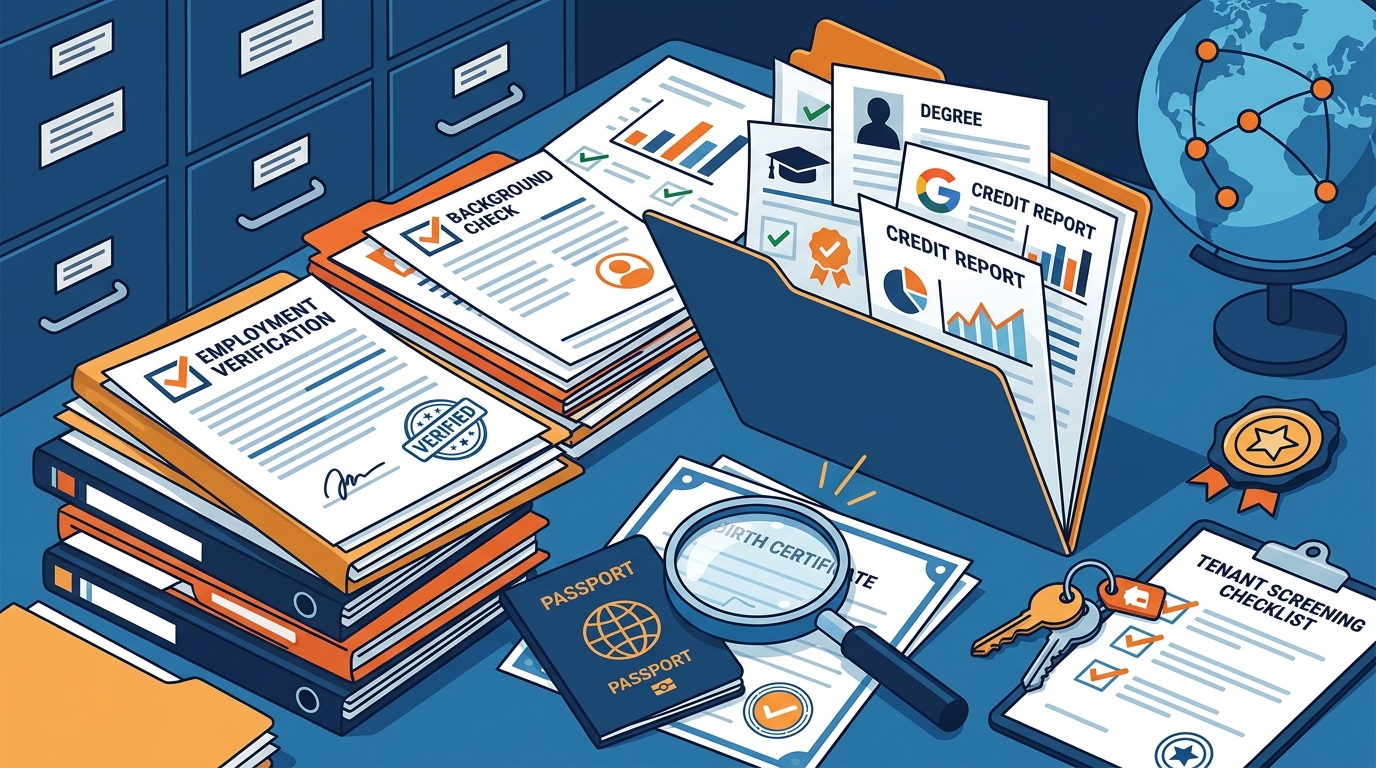
Reliable background checks utilize multiple verification methodologies to ensure accuracy. Relying on a single data point is insufficient for making high-stakes decisions. The following methods form the backbone of a robust screening process.
Criminal Record Searches
Criminal searches should cover multiple jurisdictions, including county, state, and federal levels. County records are often the most detailed, containing arrest and conviction data. Federal searches are essential for identifying crimes that cross state lines or involve federal agencies. Criminal record searches are [systematic queries of public court databases to identify legal infractions]. Ensure your provider updates these searches regularly, as records can lag in public databases.
Employment and Education Verification
Verifying past employment and education directly with the institutions is crucial. Self-reported data is prone to error or fabrication. Contact human resources departments or use verification services that interface directly with educational institutions. This step confirms the candidate's claimed tenure, job titles, and degrees. It also helps identify gaps in employment that may require further discussion.
Identity and Fraud Checks
Identity verification confirms that the individual is who they claim to be. This includes checking Social Security numbers, address histories, and government-issued IDs. Fraud checks look for signs of identity theft or synthetic identity creation. These checks are vital for preventing impersonation and ensuring the integrity of the applicant pool.
Interpreting Results and Decision Making
Receiving a background check report is only half the battle. Interpreting the results requires context and adherence to legal guidelines. Not every negative finding disqualifies a candidate. The relevance of the information to the job or lease application is key.
Consider the nature of the offense, the time elapsed since the event, and the relevance to the position. A minor traffic violation from ten years ago is likely irrelevant to a software engineering role. However, a recent fraud conviction might be critical for a financial position. This concept is known as job-relatedness is [the assessment of whether a background check result is directly relevant to the duties of the position].
Document your decision-making process. Keep records of the criteria used to evaluate the results. This documentation is essential for defending against potential discrimination claims. Ensure that your screening criteria are applied consistently to all candidates to avoid disparate impact issues.
Key Takeaways
- Compliance is Non-Negotiable: Always adhere to FCRA guidelines, including obtaining written consent and following adverse action procedures.
- Depth Matters: Rely on multi-jurisdictional searches rather than single-source databases to ensure comprehensive coverage.
- Direct Verification: Verify employment and education directly with institutions to avoid inaccuracies from secondary sources.
- Contextual Analysis: Evaluate findings based on job-relatedness and the time elapsed since the event.
- Documentation: Maintain detailed records of your screening criteria and decision-making processes for legal protection.
- Provider Selection: Choose CRA-compliant providers with robust data coverage and strong customer support.
- Continuous Monitoring: Consider ongoing screening for existing employees to maintain long-term security.
Frequently Asked Questions
How long does a typical background check take?
Most standard background checks are completed within 24 to 48 hours. However, complex searches involving multiple jurisdictions or manual verification of education records may take up to five business days.
Can I conduct a background check without the candidate's consent?
No, under the Fair Credit Reporting Act (FCRA), you must obtain written consent from the candidate before conducting a background check. Failure to do so can result in significant legal penalties.
What is the difference between a criminal search and a background check?
A criminal search is a component of a background check. A background check is a broader term that includes criminal records, employment verification, education checks, and identity verification.
How far back do background checks typically go?
Criminal records searches often go back seven to ten years, depending on state laws and the level of the position. However, some jurisdictions allow for unlimited searches for certain roles, such as those working with vulnerable populations.
What should I do if I find an error in a background check report?
If you find an error, you must follow the FCRA dispute process. Provide the candidate with the opportunity to dispute the information. The consumer reporting agency is required to investigate and correct any inaccuracies.
Are online background check services reliable?
Many online services are not FCRA-compliant and may provide inaccurate data. For employment or tenant screening, it is crucial to use a certified Consumer Reporting Agency (CRA) to ensure legal compliance and data accuracy.
Can a background check reveal mental health history?
No, standard background checks do not include mental health records. These are protected under the Health Insurance Portability and Accountability Act (HIPAA) and other privacy laws.
Start Your Screening Process
Securing your organization against risk requires a proactive and compliant approach to background screening. Don't leave your hiring or leasing decisions to chance. Partner with a trusted provider to ensure accuracy, speed, and legal adherence. Visit 2verifi.com to explore our comprehensive screening solutions and start protecting your business today.