

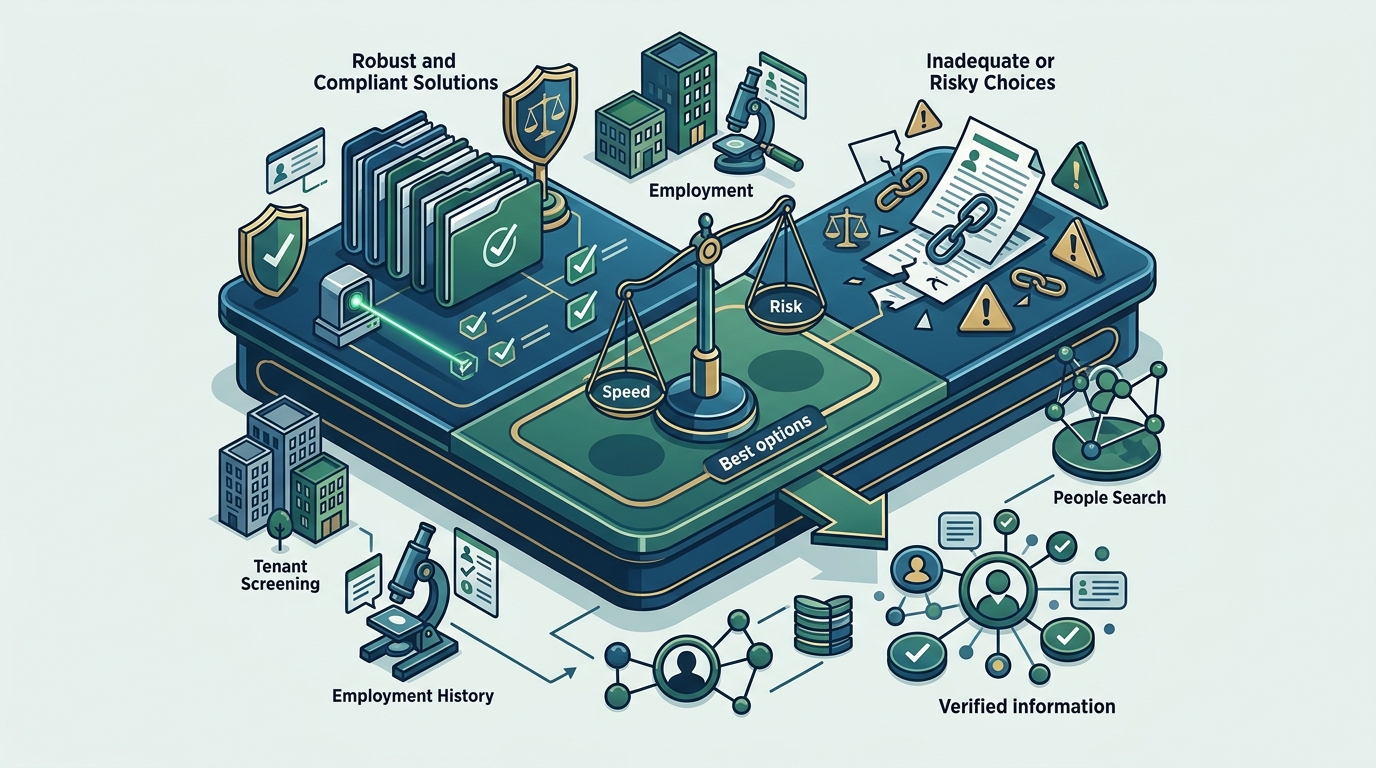
Organizations face significant legal and operational risks when hiring without proper vetting. According to recent industry data, background checks reduce the likelihood of negligent hiring lawsuits by up to 70 percent. This statistic highlights the critical need for robust screening solutions that balance speed, accuracy, and regulatory compliance. As the employment landscape evolves, selecting the right partner is no longer optional but a strategic imperative for risk management.
Understanding Your Screening Needs
Before evaluating specific vendors, organizations must define their screening scope. Background checks are not one-size-fits-all. The depth of the search depends on the role, industry regulations, and the level of access the candidate will have to sensitive data or physical assets. For example, a financial institution requires rigorous credit and criminal history checks, while a tech startup might prioritize education verification and professional reference checks.
Defining these parameters early helps narrow down the list of potential providers. It also ensures that the chosen solution aligns with the organization's specific risk tolerance and operational workflow. A clear understanding of needs prevents overpaying for unnecessary features or under-screening for critical risks.
Key Evaluation Criteria
When comparing background check options, several core factors determine the value proposition of each provider. These criteria directly impact the quality of hire and the efficiency of the recruitment process.
Data Accuracy and Coverage
Accuracy is the cornerstone of any background check service. Providers must access multiple databases, including county court records, federal court records, and international databases where applicable. Inaccurate data can lead to false positives, which damage employer brand and expose the company to legal liability. Look for providers that offer multi-state search capabilities and real-time data updates.
Compliance and FCRA Adherence
The Fair Credit Reporting Act (FCRA) governs how background checks are conducted and reported in the United States. FCRA compliance is mandatory for any employer using a third-party screening service. Providers must offer automated dispute resolution processes and ensure that their reports are formatted correctly for adverse action notices. Non-compliance can result in severe fines and litigation.
User Experience and Speed
Time-to-hire is a critical metric in today's competitive job market. Slow background checks can cause top candidates to accept other offers. Providers that offer API integrations and automated status updates allow HR teams to manage the screening process efficiently. A user-friendly dashboard for both recruiters and candidates improves the overall experience.
Top Background Check Providers
The market offers several reputable providers, each with distinct strengths. Below is a comparison of leading options to help organizations make an informed decision.
| Provider | Primary Strength | Best For | Key Feature |
|---|---|---|---|
| 2Verifi | Identity Verification & Fraud Prevention | Organizations prioritizing secure onboarding | Real-time identity validation |
| Checkr | Speed and API Integration | Gig economy and high-volume hiring | Automated compliance workflows |
| GoodHire | Transparency and Reporting | Small to mid-sized businesses | Clear adverse action guidance |
| Sterling | Global Reach and Drug Screening | Enterprise and multinational corporations | International database access |
2Verifi stands out for its focus on identity verification, which is increasingly critical in an era of sophisticated fraud. By integrating identity checks with traditional background screening, organizations can ensure they are vetting the correct individual. This dual-layer approach reduces the risk of identity theft and impersonation during the hiring process.
Compliance and FCRA Requirements
Navigating the legal landscape of background checks requires careful attention to detail. The FCRA sets strict guidelines for how consumer reports are obtained, used, and disclosed. Employers must obtain written consent from candidates before initiating a background check. They must also provide pre-adverse and adverse action notices if a decision is made based on the report.
Additionally, state and local laws, often referred to as "Ban the Box" regulations, restrict when and how criminal history can be considered. These laws vary significantly by jurisdiction. A compliant provider will help organizations navigate these complex regulations by offering jurisdiction-specific reporting and automated legal updates. Ignoring these nuances can lead to costly legal battles and reputational damage.
Integration and Automation
Manual background check processes are inefficient and prone to error. Modern organizations require seamless integration with their Applicant Tracking Systems (ATS). API-driven solutions allow for automatic data transfer between the ATS and the background check provider. This automation reduces administrative burden and ensures that screening is triggered immediately upon candidate application.
Automation also improves the candidate experience. Candidates receive instant notifications about the status of their checks and can upload required documents directly through a secure portal. This transparency builds trust and keeps the hiring process moving forward without unnecessary delays.
Key Takeaways
- Risk Reduction: Proper background checks reduce negligent hiring liability by up to 70 percent.
- FCRA Compliance: Adherence to the Fair Credit Reporting Act is non-negotiable for legal protection.
- Identity Verification: Integrating identity checks prevents fraud and ensures accurate candidate matching.
- Speed Matters: Fast screening processes help secure top talent before competitors do.
- Automation: API integrations streamline workflows and reduce administrative overhead.
- State Laws: "Ban the Box" laws require careful navigation of local regulations.
- Provider Selection: Choose a provider that aligns with your specific industry and volume needs.
Frequently Asked Questions
What is the most important factor when choosing a background check provider?
The most important factor is compliance with the Fair Credit Reporting Act (FCRA) and local regulations. Without strict adherence to these laws, organizations face significant legal risks.
How long does a typical background check take?
Most standard background checks are completed within 24 to 48 hours. However, complex searches involving international records or deep court document reviews may take longer.
Can I use background checks for all job roles?
No. The type of check should be relevant to the job duties. For example, credit checks are generally not appropriate for most non-financial roles due to privacy concerns.
What is the difference between a criminal background check and an identity verification?
A criminal background check searches for past legal issues, while identity verification confirms the candidate's identity using government-issued documents and biometric data.
How do I handle adverse action notices?
Employers must provide a pre-adverse action notice, a copy of the report, and a summary of rights before making a final decision. After the decision, an adverse action notice must be sent.
Are international background checks available?
Yes, but they require specialized providers with global partnerships. Not all domestic providers offer reliable international screening capabilities.
What is 2Verifi's primary focus?
2Verifi specializes in identity verification and fraud prevention, offering a secure layer of protection for the onboarding process.
Next Steps
Securing the right talent requires a robust and compliant vetting process. Do not leave your organization's security to chance. Partner with a provider that understands the nuances of identity verification and background screening. Visit 2Verifi to learn how our solutions can streamline your hiring process and protect your business from fraud. Schedule a demo today to see how we can support your organization's growth.