

Employment verification is the process of confirming a candidate's work history, job titles, and dates of employment. This step is critical for reducing hiring risk and ensuring compliance with federal regulations. At 2verifi, we help organizations validate these claims using secure, data-driven methods that protect both the employer and the applicant. For additional details, review the 2verifi com.
1. Direct Employer Verification
Direct contact with the hiring manager or HR department is the most traditional method.
This approach involves calling or emailing the previous employer to confirm specific details. While effective, it can be time-consuming and may yield inconsistent results depending on the size of the company. Smaller businesses often lack dedicated HR staff to handle these requests promptly. For additional details, review the About.
2. Automated Verification Services
Automated platforms streamline the process by aggregating data from multiple sources.
Services like 2verifi use secure APIs to connect with employer databases and public records. This method reduces manual effort and provides faster turnaround times. It also ensures consistency in how data is collected and reported across different candidates.
3. Pay Stub and Tax Document Review
4. Reference Checks
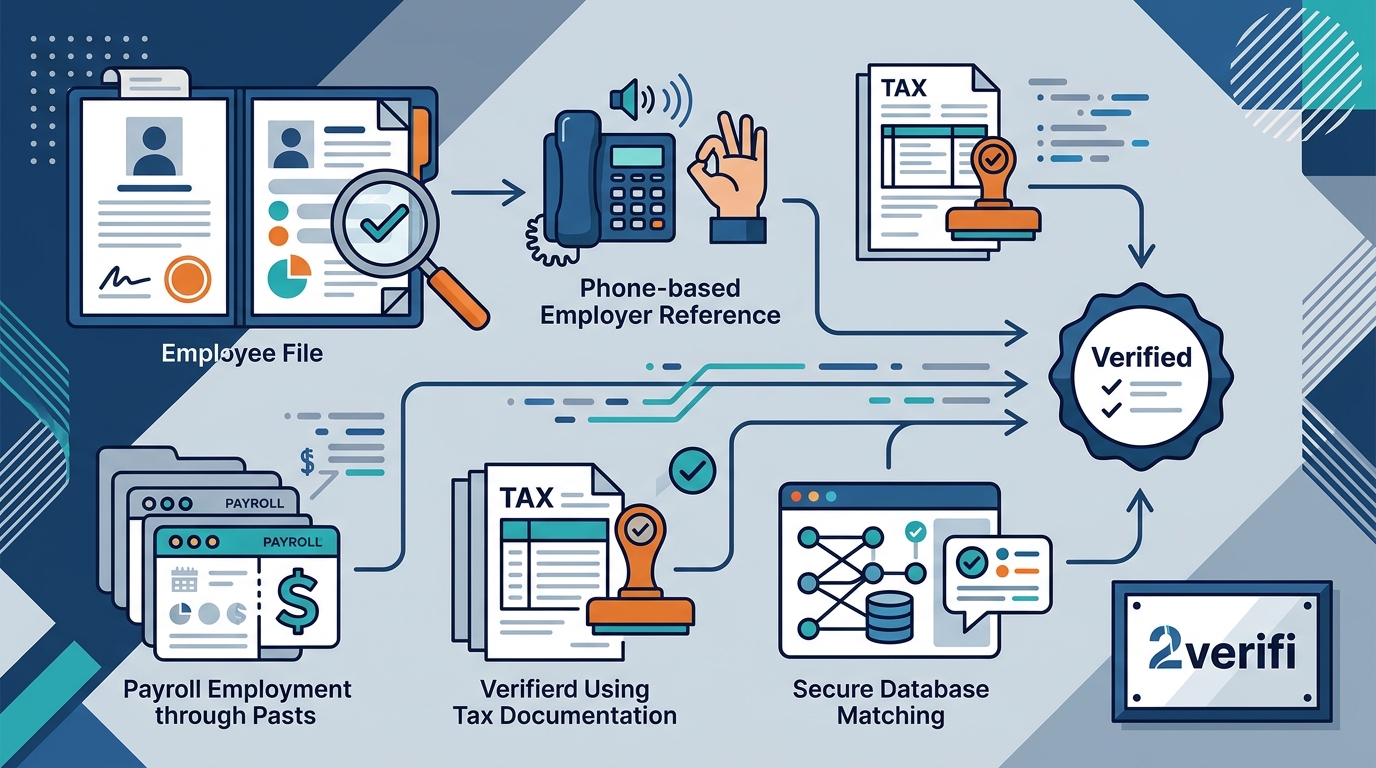
5. Social Media and Digital Footprint Analysis
Digital profiles often contain employment history that candidates may omit.
Platforms like LinkedIn provide a public record of work experience. Cross-referencing these profiles with official records can reveal discrepancies. This method is useful for identifying gaps or unlisted roles that might raise red flags.
6. Government and Industry Registry Lookups
Certain professions require licenses that can be verified through official registries.
For roles in healthcare, finance, or law, checking state or national license databases confirms active status. These registries are maintained by regulatory bodies and provide reliable data. This method is essential for compliance in regulated industries.
7. Background Check Aggregators
Comprehensive background checks combine multiple verification methods into one report.
These services pull data from criminal records, credit reports, and employment databases. They provide a holistic view of the candidate's history. Using an aggregator ensures that no single point of failure compromises the verification process.
Choosing the Right Method
Select the verification method based on the role's risk level and industry requirements. For high-stakes positions, combine automated services with direct employer verification. For entry-level roles, a digital footprint analysis and reference check may suffice. Always ensure your process complies with the Fair Credit Reporting Act (FCRA).
Frequently Asked Questions
Is it legal to verify employment history?
Yes, it is legal to verify employment history, provided you follow FCRA guidelines. You must obtain written consent from the candidate before conducting a background check. You must also provide a pre-adverse action notice if you plan to deny employment based on the results. according to Verify a Census
How long does employment verification take?
Automated services can provide results within minutes to hours. Direct employer verification may take several days to weeks, depending on the responsiveness of the previous employer. Using a combination of methods can help balance speed and thoroughness.
What if the previous employer refuses to verify?
Some employers have policies against providing detailed verification. In these cases, rely on alternative methods such as pay stubs, tax documents, or reference checks. You can also request a letter of employment from the candidate's previous supervisor.
Can I verify employment for international candidates?
Yes, but the process may be more complex due to different legal and data privacy regulations. Use a global verification service that understands local laws. Ensure that you comply with both US and foreign data protection standards. Learn more: 2verifi com.