

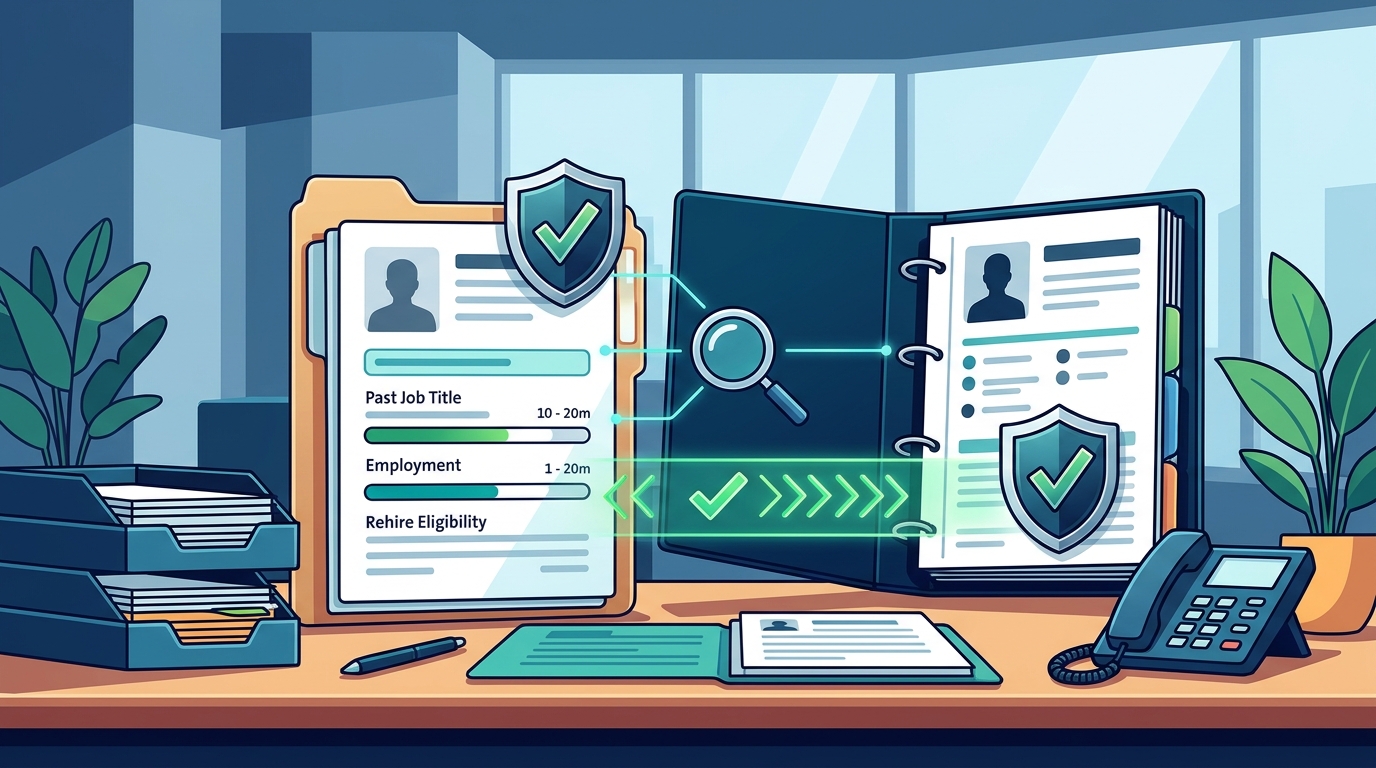
Background check services verify past employment by cross-referencing candidate-provided data with official employer records. Third-party verification ensures accuracy by confirming dates, titles, and rehire eligibility directly with HR departments. This process protects employers from misrepresentation while maintaining compliance with federal privacy laws. For additional details, review the 2verifi com.
Core Verification Methods
Direct Employer Contact
Verification specialists typically contact the Human Resources department of the previous employer. They use standardized forms to request specific data points. This direct approach minimizes the risk of third-party data errors. For additional details, review the .
Automated Data Aggregation
Some services use automated systems to pull data from public records or previous verification databases. While faster, this method requires manual review to ensure the data is current and accurate. For additional details, review the Customer Experience.
Legal and Compliance Frameworks
Employment verification is a regulated activity governed by federal and state laws. The Fair Credit Reporting Act (FCRA) is the primary federal statute that regulates how background reports are used for employment purposes. Compliance ensures that candidates' rights are protected throughout the screening process. For additional details, review the Frequently Asked Questions.
FCRA Requirements
The FCRA requires that employers obtain written consent from candidates before initiating a background check. It also mandates that candidates receive a copy of the report if adverse action is taken. These steps ensure transparency and fairness in the hiring process. For additional details, review the About.
Data Disposal Protocols
Regulations require secure disposal of background check reports. The EEOC guidance specifies that paper documents must be shredded and electronic data destroyed so it cannot be reconstructed. This protects sensitive personal information from unauthorized access.
Ensuring Data Accuracy
Data accuracy is the cornerstone of a reliable background check. Errors in employment verification can lead to wrongful hiring decisions or legal liability. Verification services use multiple data sources to triangulate the truth.
Triangulation of Data
Services compare candidate-provided data with employer records and, where available, public records. Discrepancies are flagged for manual review. This multi-source approach significantly reduces the likelihood of false positives.
Handling Discrepancies
When discrepancies are found, the candidate is typically given an opportunity to explain. This process, known as adverse action, ensures that candidates can correct errors or provide context for gaps in their employment history.
Common Verification Pitfalls
Even with robust verification processes, certain pitfalls can compromise the integrity of the results. Understanding these challenges helps employers and candidates navigate the process more effectively.
Outdated Records
Employers may not always have up-to-date records, especially for long-ago positions. Verification services must account for this by using the most recent available data and noting any limitations in the report.
Communication Barriers
Language barriers or poor communication with HR departments can lead to incomplete or inaccurate responses. Professional verification services use trained staff to navigate these challenges and ensure clear, consistent data collection.
Key Takeaways
- Employment verification is the process of confirming work history through direct employer contact and data cross-referencing.
- The FCRA mandates written consent and adverse action procedures to protect candidate rights.
- Secure data disposal is required by law to prevent unauthorized access to sensitive information.
- Triangulating data from multiple sources improves accuracy and reduces false positives.
- Discrepancies should be resolved through a fair adverse action process that allows candidates to explain.
- Professional verification services mitigate common pitfalls like outdated records and communication barriers.
Frequently Asked Questions
What is employment verification?
Employment verification is the process of confirming a candidate's work history by contacting previous employers and cross-referencing provided data with official records.
How do background check services verify employment?
Services verify employment by contacting HR departments directly, using standardized forms, and cross-referencing candidate-provided data with official employer records.
What laws regulate employment verification?
The Fair Credit Reporting Act (FCRA) is the primary federal law regulating employment verification. It requires written consent and adverse action procedures.
What happens if there is a discrepancy in the report?
If a discrepancy is found, the candidate is typically given an opportunity to explain through an adverse action process. This ensures fairness and allows for corrections.
How is sensitive data protected?
Sensitive data is protected through secure disposal protocols. Paper documents are shredded, and electronic data is destroyed so it cannot be reconstructed, as required by law.
Can candidates dispute the results of a background check?
Yes, candidates can dispute the results of a background check. The FCRA provides procedures for disputing inaccurate information and requesting corrections. Learn more: 2verifi com.