

Pre-employment screening typically takes between 24 hours and 10 business days, depending on the complexity of the checks and the candidate's location. At 2verifi, we focus on providing accurate and reliable information to help organizations make informed hiring decisions. The timeline varies based on factors like criminal history, employment verification, and credit checks. Understanding these variables helps employers set realistic expectations for their hiring process.
Factors Influencing Screening Speed
The speed of a background check is not uniform. Several critical factors determine how long the process takes from start to finish. The primary driver is the scope of the report requested by the employer.
Scope of the Report
A basic criminal background check is often faster than a comprehensive 10-year national search. If the role requires a credit check or drug screening, the timeline extends. For example, a standard employment verification might take 3 to 5 days, while a full pre-employment package can take up to 10 days.
Geographic Location
The candidate's location significantly impacts turnaround time. Records from large metropolitan areas may be digitized and accessible quickly. However, rural counties or states with slower court systems can delay results. A candidate in a state with automated court records may receive results in 24 hours, whereas a candidate in a region with manual record-keeping may wait several weeks.
Data Source Availability
The availability of data in public records databases also plays a role. If a record is not indexed in a national database, the screening provider must search local court systems directly. This manual process adds time. At 2verifi, we utilize comprehensive data sources to minimize these delays and ensure accuracy.
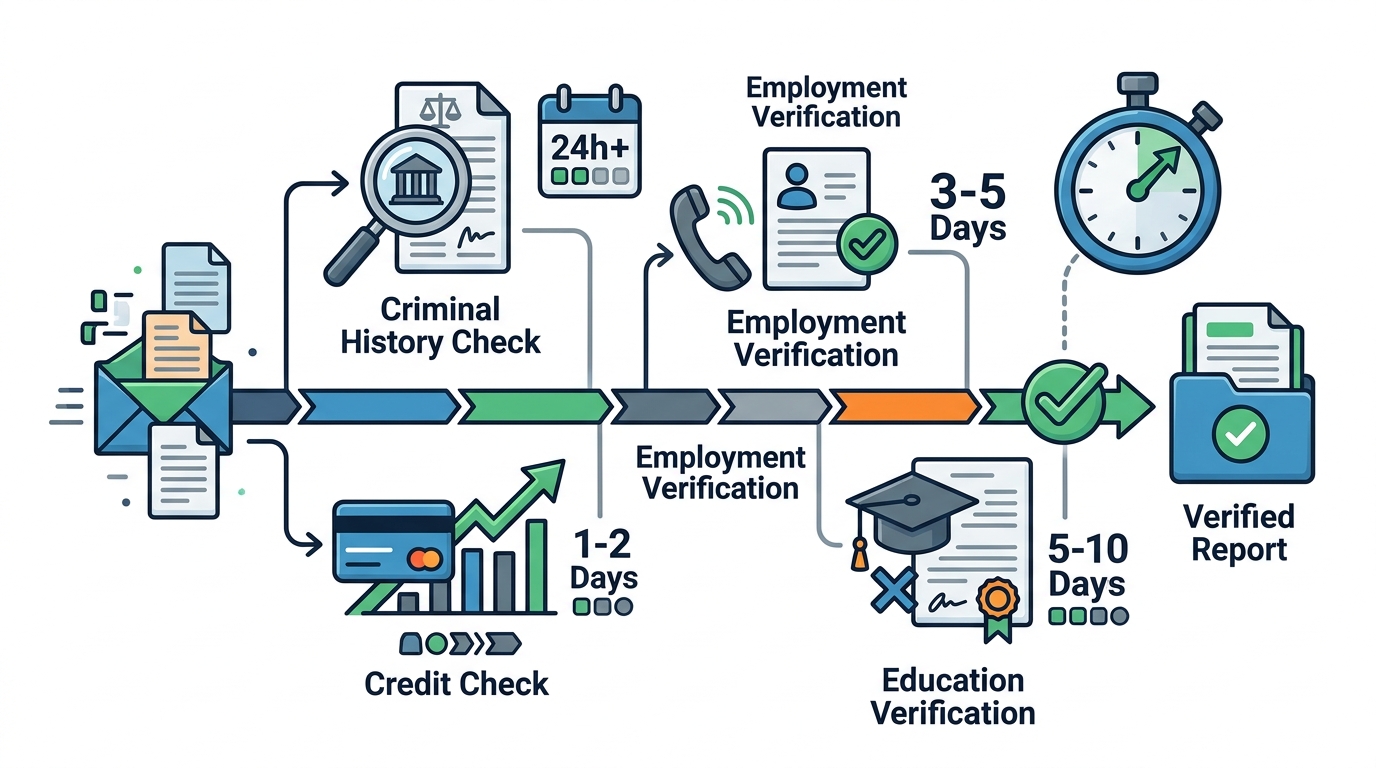
Standard Turnaround Times by Check Type
Different components of a background check have distinct average processing times. Understanding these helps in planning the hiring schedule.
Criminal History Checks
Criminal background checks are the most common component. A county-level search often completes within 24 to 48 hours. A national criminal database search may take 1 to 3 business days. If a hit is found, manual verification is required, which can add 3 to 5 additional days.
Employment Verification
Employment verification involves contacting previous employers to confirm dates and job titles. This process typically takes 3 to 7 business days. Delays occur if the previous employer is unresponsive or if the candidate provided incomplete information. Accurate candidate data is crucial for speeding up this phase.
Education Verification
Verifying degrees and certifications usually takes 5 to 10 business days. Universities and accreditation bodies have varying response times. Some institutions process requests within 48 hours, while others may take up to two weeks. This variability makes it important to start this check early in the process.
The Role of Candidate Cooperation
The candidate's responsiveness directly affects the overall timeline. Delays often stem from incomplete applications or slow responses to consent forms.
Consent and Authorization
Candidates must provide signed consent before a background check can begin. If this step is delayed, the entire process is paused. Employers should ensure candidates understand the importance of timely consent. At 2verifi, we streamline the consent process to reduce initial delays.
Data Accuracy
Inaccurate personal information, such as a misspelled name or incorrect date of birth, can cause significant delays. The screening provider may need to pause the search to resolve discrepancies. Candidates should review their application details carefully before submission. This simple step can save days in the overall process.
Optimizing the Screening Process
Employers can take specific steps to minimize turnaround times. Proactive measures help ensure a smooth and efficient hiring process.
Start Early
Initiating the background check as soon as the candidate provides consent is the most effective strategy. Waiting until the final interview stage can compress the timeline and create bottlenecks. Starting the process early allows for any necessary follow-ups without delaying the offer.
Clear Communication
Maintaining open communication with the candidate helps resolve issues quickly. If the screening provider needs additional information, a responsive candidate can provide it promptly. Employers should set clear expectations with candidates regarding the timeline and their role in the process.
Key Takeaways
- Pre-employment screening typically takes 24 hours to 10 business days.
- The scope of the check, such as criminal, employment, or education verification, significantly impacts the timeline.
- Geographic location and data source availability affect how quickly records are retrieved.
- Candidate cooperation, including timely consent and accurate data, is crucial for speed.
- Starting the screening process early in the hiring cycle helps avoid last-minute delays.
Frequently Asked Questions
How long does a standard criminal background check take?
A standard criminal background check usually takes 24 to 48 hours for county-level searches and 1 to 3 business days for national database searches. Manual verification of hits can add additional time.
What causes delays in employment verification?
Delays in employment verification often occur when previous employers are unresponsive or when the candidate provides incomplete information. Accurate data and prompt responses help mitigate these delays.
Can I speed up the background check process?
Yes, you can speed up the process by providing accurate personal information, signing consent forms promptly, and starting the check early in the hiring cycle. Clear communication with the screening provider also helps.
Does the candidate's location affect the turnaround time?
Yes, the candidate's location affects the turnaround time. Areas with digitized court records may yield faster results, while rural areas with manual record-keeping may take longer.
How does 2verifi ensure accuracy in background checks?
2verifi ensures accuracy by utilizing comprehensive data sources and thorough verification processes. Our goal is to provide reliable information that helps organizations make informed decisions.
What is the average time for education verification?
Education verification typically takes 5 to 10 business days, depending on the responsiveness of the educational institution. Some universities process requests faster than others. Learn more: 2verifi com.