
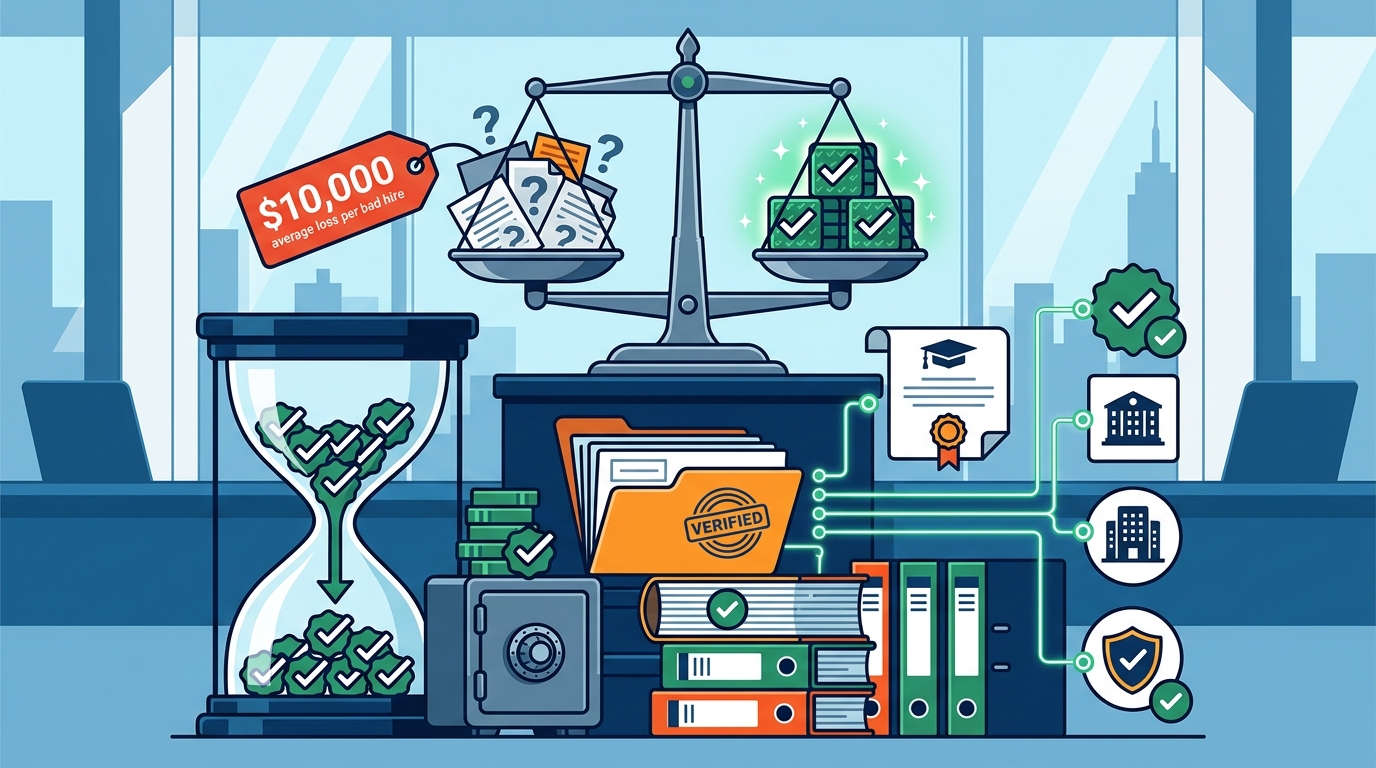
Employment verification is the cornerstone of risk management for modern hiring teams. According to recent industry data, background screening errors can cost companies an average of $10,000 per bad hire in direct and indirect losses. This statistic highlights why accuracy is not just a preference but a financial imperative. Organizations must rely on verified data sources to mitigate liability and ensure workplace safety. The process involves strict adherence to federal regulations and direct communication with former employers.
Understanding Verification Standards
Accuracy begins with defining what constitutes reliable data. Employment verification is the process of confirming a candidate's work history, including job titles, dates of employment, and eligibility to work. This process is critical for validating the claims made in a resume. Without proper verification, companies risk hiring individuals with inflated credentials or hidden disciplinary records.
Employment verification is the formal confirmation of a candidate's professional history through direct contact with previous employers or authorized databases. This definition underscores the need for primary source data rather than self-reported information. Primary sources provide the highest level of accuracy because they are not filtered through the candidate's perspective.
For government and enterprise clients, the stakes are even higher. The E-Verify authorization report matches an individual’s personal identification factors in the DHS database and in the Social Security Administration database to determine one’s employment eligibility within the United States. Reports will show the following information dependent upon authorization status: Work Authorized, Tentative Non-Confirmation, Watch List or DHS/DOD Hold. This level of detail is essential for federal compliance.
Choosing the Right Provider
Selecting a background screening partner requires evaluating their reach, compliance record, and technological infrastructure. Not all providers have equal access to global databases or the ability to handle complex multi-state requirements. A reputable provider should have decades of experience navigating the evolving landscape of employment law.
For nearly half a century we have built a reputation as the "go to" company for employment screening for companies and government sector employers worldwide. This longevity indicates a stable infrastructure capable of handling high-volume requests without compromising data integrity. When evaluating providers, look for those that offer static retainer fees or PRN (as needed) for all its compliance services. This flexibility allows businesses to scale their screening efforts based on immediate hiring needs.
Additionally, consider the provider's ability to integrate with existing human resources systems. The Respond® service of Verifi, LLC enables human resources departments to effectively and efficiently RESPOND® to requests from employers, financial institutions, and government agencies on the status of a current or former employee. This integration reduces manual data entry and minimizes the risk of human error.
The Verification Workflow
Getting accurate information requires a structured workflow. The process typically begins with candidate authorization. Under the Fair Credit Reporting Act (FCRA), candidates must provide written consent before any background check is conducted. This step is non-negotiable and protects both the employer and the candidate.
Once authorization is secured, the screening provider initiates contact with previous employers. This step often involves verifying employment dates, job titles, and reasons for leaving. Some employers may only confirm dates of employment due to internal policies. In such cases, the provider must rely on alternative verification methods, such as tax records or third-party databases.
For drug testing, the process is equally rigorous. VERIFI has a strategic partnership with FormFox. FormFox is the fastest, easiest way for employers to order drug tests. This partnership ensures that biological samples are collected and analyzed according to strict DOT guidelines. The results are then integrated into the candidate's overall profile, providing a comprehensive view of their suitability for the role.
Compliance and Regulations
Compliance is the most critical aspect of employment verification. Laws vary by state and country, and failure to adhere to these regulations can result in severe legal penalties. The first segment shows you the complaints and investigations being conducted by the FTC, FCRA and additional agencies on other service providers within the background screening industry. The second section contains links to the federal agencies that provide helpful information to consumers. Understanding these regulatory landscapes is essential for maintaining operational integrity.
DOT drug testing and compliance does not have to be expensive. However, it must be done correctly. The Department of Transportation (DOT) has specific protocols for drug and alcohol testing in the workplace. These protocols include pre-employment screening, random testing, and post-accident testing. Providers must be certified to conduct these tests and must follow strict chain-of-custody procedures to ensure the validity of the results.
Compliance and Due Diligence are key to a successful outcome in background checks and drug testing. This principle applies to every stage of the screening process. From initial data collection to final report generation, every step must be documented and auditable. This documentation protects the employer in the event of a legal challenge or regulatory audit.
Technology and Speed
In today's fast-paced hiring environment, speed is just as important as accuracy. Manual verification processes can take weeks, delaying hiring decisions and losing top talent to competitors. Modern screening providers use automated systems to accelerate this process without sacrificing quality.
Technology enables real-time data retrieval from multiple sources. This includes court records, criminal databases, and employment history databases. By automating the initial screening phase, providers can quickly identify red flags and focus human expertise on complex cases. This hybrid approach ensures that accurate information is delivered quickly.
Furthermore, digital platforms allow for seamless communication between employers, candidates, and former employers. Candidates can submit their authorization forms online, and former employers can verify employment directly through secure portals. This digital workflow reduces turnaround times and improves the overall candidate experience.
Key Takeaways
- Employment verification errors can cost companies an average of $10,000 per bad hire.
- Verifi, LLC has served the industry for nearly half a century, establishing deep expertise.
- E-Verify reports match data against DHS and SSA databases for employment eligibility.
- Respond® service allows HR departments to efficiently manage verification requests.
- FormFox partnership provides the fastest method for ordering DOT drug tests.
- Compliance with FTC and FCRA regulations is mandatory for all screening activities.
- Static retainer or PRN models offer flexible compliance service options.
Frequently Asked Questions
What is the most accurate source for employment verification?
The most accurate source is direct contact with the former employer's human resources department or authorized verification database. Self-reported data is secondary and should only be used if primary sources are unavailable.
How long does the employment verification process take?
Turnaround times vary based on the complexity of the request and the responsiveness of previous employers. Automated systems can provide results in as little as 24 to 48 hours for standard checks, while complex criminal or international verifications may take longer.
Is candidate consent required for background checks?
Yes, under the Fair Credit Reporting Act (FCRA), written consent from the candidate is required before any background check is conducted. This is a legal requirement for all employers using third-party screening services.
What is E-Verify and how does it work?
E-Verify is an online system that helps businesses confirm the eligibility of their employees to work in the United States. It matches employee information against records from the Social Security Administration and the Department of Homeland Security.
How can I ensure DOT drug testing compliance?
Ensure compliance by partnering with a certified provider like Verifi, LLC, which utilizes FormFox for efficient and accurate drug test ordering and analysis. Strict adherence to DOT chain-of-custody procedures is essential.
What are the benefits of using a static retainer for compliance?
A static retainer provides predictable costs and priority access to compliance services. It is ideal for organizations with consistent screening needs, allowing for streamlined budgeting and faster service delivery.
Can Verifi handle international employment verification?
Yes, Verifi, LLC works with clients within a multitude of industries globally, establishing world-class products and services for international employment screening needs.
Contact Verifi
Accurate employment verification is not just about data; it is about trust, compliance, and risk mitigation. Partner with a provider that understands the nuances of the industry and the specific needs of your organization. For expert background screening and compliance services, contact Verifi, LLC today.
Visit our Contact page to speak with a specialist or request a demo. Our team is ready to help you streamline your hiring process and ensure you have the accurate information you need to make confident decisions.