

The global identity verification market is undergoing a seismic shift as fraud rates escalate and regulatory scrutiny intensifies. According to recent industry data, digital fraud losses are projected to exceed $48 billion annually by 2026, forcing businesses to abandon legacy verification processes that are both slow and insecure. This surge in malicious activity has created an urgent demand for robust, real-time identity proofing solutions that can balance security with user experience. Companies must now evaluate whether traditional manual checks or modern automated platforms offer the necessary protection against sophisticated identity theft schemes.
Why Traditional Verification Fails
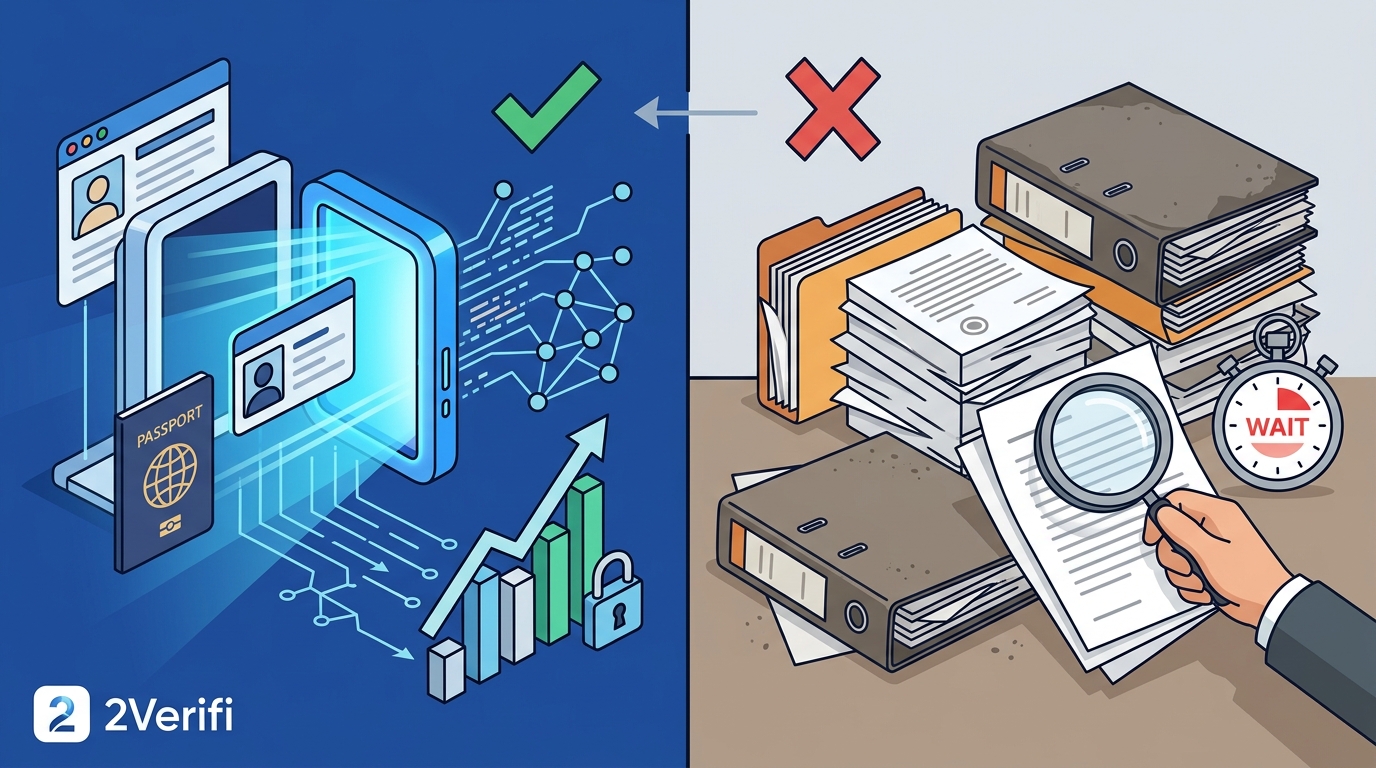
Legacy identity verification methods often rely on manual document review or basic knowledge-based authentication. These approaches are inherently flawed because they cannot keep pace with the speed of digital transactions. Manual reviews create bottlenecks that frustrate users and increase operational costs significantly. Furthermore, knowledge-based questions are increasingly vulnerable to social engineering attacks and data breaches.
Traditional systems also struggle with scalability. During peak traffic periods, such as tax season or holiday sales, manual verification teams become overwhelmed, leading to delayed onboarding times. This delay directly impacts conversion rates and customer satisfaction. Businesses that cling to outdated methods risk losing users to competitors who offer seamless, instant verification experiences.
Additionally, regulatory compliance has become more complex. Laws such as the General Data Protection Regulation (GDPR) and the California Consumer Privacy Act (CCPA) require strict handling of personal data. Traditional methods often lack the audit trails and data minimization features required by modern privacy laws. This compliance gap exposes companies to significant legal and financial risks.
The 2Verifi Advantage
2Verifi represents the next generation of identity verification technology. It leverages advanced artificial intelligence and machine learning algorithms to verify identities in real-time. This approach eliminates the need for manual intervention, providing instant results that enhance user experience while maintaining high security standards. The platform is designed to integrate seamlessly with existing business workflows, reducing the technical burden on development teams.
One of the core strengths of 2Verifi is its ability to detect sophisticated fraud attempts. By analyzing multiple data points simultaneously, the system can identify inconsistencies that traditional methods might miss. This includes detecting deepfakes, manipulated documents, and synthetic identities. The result is a more secure verification process that protects both the business and the legitimate user.
2Verifi also prioritizes privacy and data security. The platform adheres to strict data protection standards, ensuring that sensitive information is handled securely throughout the verification process. This commitment to privacy helps businesses build trust with their customers, which is essential in an era where data breaches are common. For more information on how 2Verifi protects your data, visit the 2Verifi homepage.
Feature Comparison Matrix
Understanding the differences between traditional verification and modern platforms like 2Verifi is crucial for making an informed decision. The table below outlines the key differences in performance, security, and user experience.
| Feature | Traditional Verification | 2Verifi Solution |
|---|---|---|
| Verification Speed | Hours to Days | Real-Time (Seconds) |
| Fraud Detection | Basic Rule-Based | AI-Powered Deep Learning |
| Manual Review | Required | Automated |
| Compliance Support | Limited | Full GDPR/CCPA Ready |
| User Experience | Friction Heavy | Seamless & Intuitive |
Implementation Considerations
When comparing identity verification solutions, businesses must consider the ease of integration. Traditional methods often require significant custom development to connect with existing systems. In contrast, modern APIs like those provided by 2Verifi are designed for quick deployment. This reduces the time to market and allows businesses to start protecting their platforms sooner.
Cost is another critical factor. While traditional verification might seem cheaper initially due to lower subscription fees, the hidden costs of manual labor, fraud losses, and customer churn often outweigh these savings. Automated solutions offer a predictable cost structure that scales with business growth. This predictability is essential for financial planning and budget management.
Scalability is also a key consideration. As your business grows, your verification needs will change. A solution that works for a small startup may not handle the volume of a large enterprise. 2Verifi is built to scale, ensuring that performance remains consistent regardless of transaction volume. This reliability is vital for maintaining service quality during periods of rapid expansion.
Key Takeaways
- Digital fraud losses are projected to exceed $48 billion annually by 2026, highlighting the urgency of robust verification.
- Traditional manual verification methods are slow, costly, and prone to human error.
- 2Verifi uses AI to provide real-time identity verification, reducing fraud and improving user experience.
- Automated solutions offer better scalability and compliance support than legacy systems.
- Integration ease is a major advantage of modern APIs over custom-built traditional solutions.
- Privacy compliance is critical, and modern platforms like 2Verifi are designed with GDPR and CCPA in mind.
- Choosing the right verification method directly impacts conversion rates and customer trust.
Frequently Asked Questions
What is identity verification?
Identity verification is the process of confirming that a person is who they claim to be. It typically involves checking government-issued documents, biometric data, or other personal information against trusted sources.
How does 2Verifi compare to manual verification?
2Verifi offers significantly faster verification times, often completing the process in seconds compared to hours or days for manual checks. It also provides more consistent fraud detection through AI analysis.
Is 2Verifi compliant with privacy regulations?
Yes, 2Verifi is designed to comply with major privacy regulations such as GDPR and CCPA. It ensures that personal data is handled securely and in accordance with legal requirements.
Can 2Verifi integrate with my existing system?
2Verifi provides robust APIs that are designed for easy integration with various platforms and systems. This allows businesses to quickly deploy verification without extensive custom development.
What types of fraud does 2Verifi detect?
2Verifi detects a wide range of fraud types, including document forgery, deepfakes, synthetic identities, and social engineering attacks. Its AI models are continuously updated to address emerging threats.
How much does 2Verifi cost?
Pricing for 2Verifi varies based on usage and specific business needs. Businesses are encouraged to contact the 2Verifi team for a customized quote that fits their budget and volume requirements.
Does 2Verifi support international documents?
Yes, 2Verifi supports verification for a wide range of international identity documents. The platform is designed to handle diverse document formats and languages to support global businesses.
Get Started with 2Verifi
Stop losing customers to slow verification processes and fraud. Switch to 2Verifi today and experience the difference that real-time, AI-powered identity verification can make for your business. Visit 2Verifi.com to learn more and request a demo.