

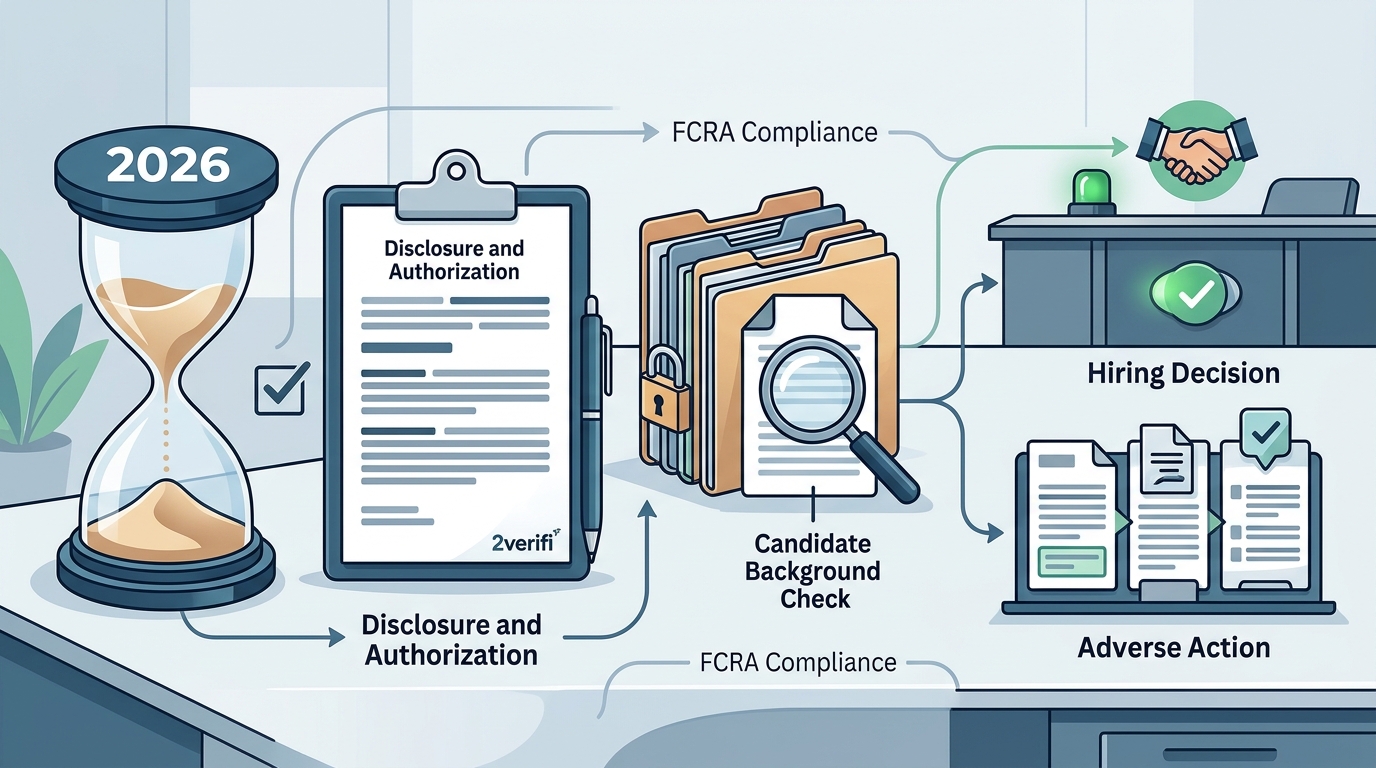
Employers must follow the Fair Credit Reporting Act (FCRA) when using third-party services to verify candidate employment history. This federal law mandates specific disclosure and authorization steps before a background check begins. It also requires adverse action procedures if the report influences a hiring decision. 2verifi helps organizations navigate these legal requirements by providing compliant screening tools that protect both the business and the applicant. For additional details, review the 2verifi com.
Understanding the Scope of the FCRA
The Federal Trade Commission (FTC) enforces the FCRA for employment purposes. The Equal Employment Opportunity Commission (EEOC) also plays a role in ensuring that background checks do not discriminate. The EEOC provides guidance on how employers must use background checks to avoid disparate impact. Understanding the interplay between these agencies is crucial for compliance. For additional details, review the Customer Experience.
The Disclosure and Authorization Process
Before requesting a background check, an employer must provide a clear and conspicuous disclosure to the candidate. This disclosure must be in a document that consists solely of the notice. It cannot be buried in a general application form. The candidate must then provide written authorization for the check. This authorization must be signed and dated. It must be specific to the type of report being requested. For additional details, review the Frequently Asked Questions.
This process ensures that the candidate is fully informed about what is being checked. It protects the employer from claims of unauthorized access to personal data. The disclosure must be provided at a time when the candidate can reasonably review it. It should not be the last minute before an interview or offer. Best practices suggest providing this notice at the time of application or before the interview stage. For additional details, review the About.
Employers must also ensure that the disclosure is written in plain language. Legal jargon can confuse candidates and lead to invalid authorizations. The goal is to ensure that the candidate understands exactly what they are consenting to. This transparency builds trust and reduces the risk of legal disputes. It also aligns with the spirit of the FCRA, which prioritizes consumer rights.
Adverse Action Procedures
If a background check reveals information that leads to a negative employment decision, the employer must follow specific adverse action procedures. This process is often the most misunderstood part of FCRA compliance. The employer cannot simply reject the candidate based on the report. They must first provide the candidate with a copy of the report and a summary of their rights. This is known as the pre-adverse action notice.
Failure to follow these steps is a common source of FCRA lawsuits. Courts have awarded significant damages to candidates who were denied jobs without proper notice. The adverse action process is not optional. It is a mandatory requirement under the FCRA. Employers must document every step of this process to prove compliance in case of a dispute.
State and Local Variations
While the FCRA is a federal law, state and local laws may impose additional requirements. Some states have their own background check laws that are stricter than the federal standard. For example, some states require a specific waiting period before an adverse action can be taken. Others limit the types of information that can be included in a report. Employers must research the laws in every state where they hire.
Local ordinances, often called Learn more: 2verifi com.