

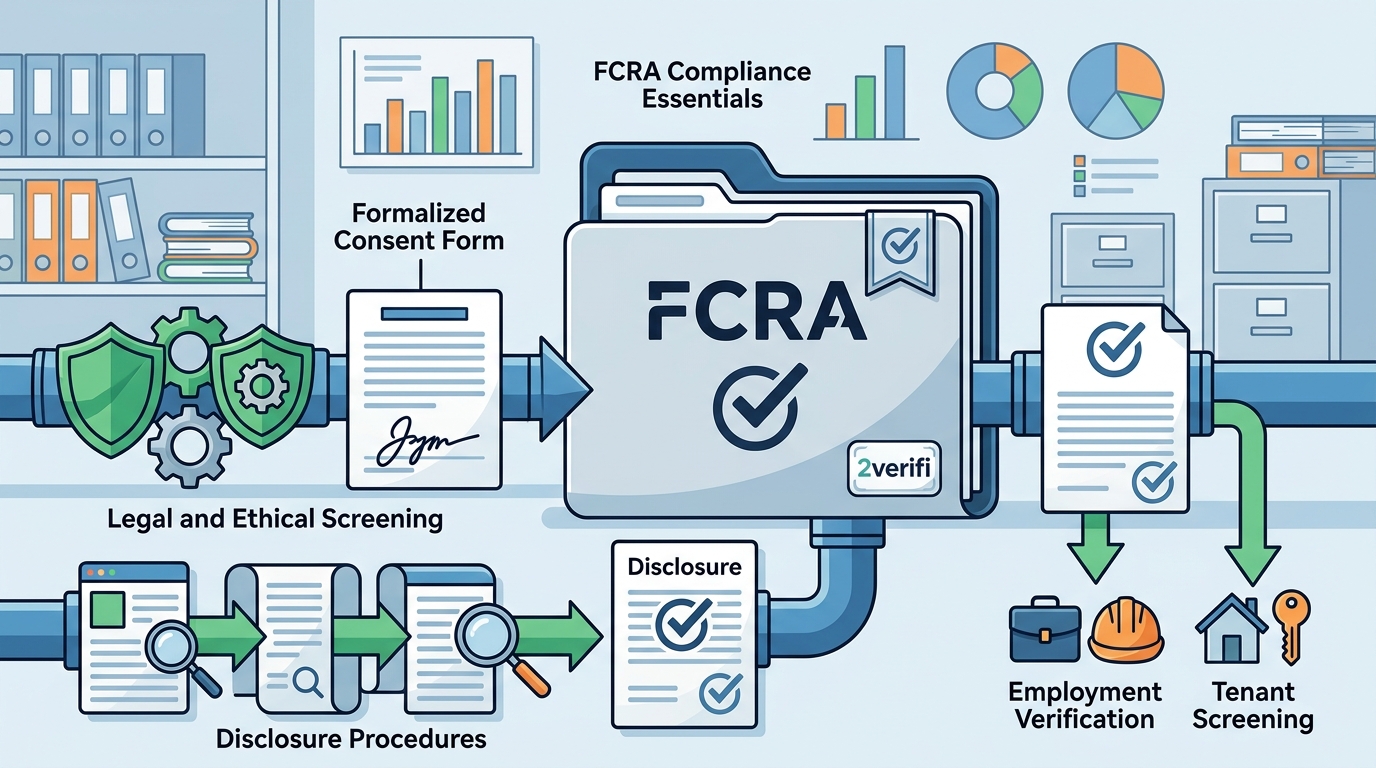
Organizations must adhere to the Fair Credit Reporting Act (FCRA) to ensure legal and ethical background screening. This federal law mandates specific disclosure and consent procedures before accessing consumer reports. 2verifi helps businesses navigate these complex regulatory requirements while maintaining accurate data integrity. For additional details, review the 2verifi com.
Understanding the Core Legal Framework
The Fair Credit Reporting Act is a federal statute that regulates the collection, dissemination, and use of consumer information. It establishes strict guidelines for how background check providers interact with employers and candidates. Non-compliance can result in significant civil liability and regulatory penalties. according to Fair Credit Reporting For additional details, review the .
Employers must provide a clear and conspicuous disclosure to the applicant. This document must stand alone and contain no other information. The applicant must then provide written authorization for the investigation. This two-step process is the foundation of FCRA compliance. For additional details, review the Customer Experience.
Pre-Adverse Action Procedures
If the applicant disputes the accuracy of the report, the consumer reporting agency must reinvestigate. This process ensures that errors do not result in unfair employment decisions. Organizations must document every step of this procedure to maintain a legal defense. For additional details, review the Frequently Asked Questions.
Post-Adverse Action Requirements
Record Retention and Data Security
Organizations must retain adverse action notices for a specific period. The FCRA requires that these records be kept for one year after the notice is provided. This retention policy allows for audits and legal reviews. Proper data security is also essential to protect sensitive consumer information. For additional details, review the About.
Key Takeaways
- The FCRA mandates a standalone disclosure and written consent before any background check.
- Employers must wait a reasonable time before issuing a final adverse action notice.
- Final notices must state that the CRA did not make the employment decision.
- Adverse action records must be retained for at least one year.
- Providers must ensure maximum possible accuracy in consumer reports.
Frequently Asked Questions
What is the primary purpose of the FCRA?
The FCRA ensures that consumer reports are accurate, fair, and private. It protects individuals from identity theft and unfair employment practices.
Who is responsible for FCRA compliance?
Both the employer and the background check provider share responsibility. The employer handles disclosures and adverse actions, while the provider ensures data accuracy.
How long must adverse action notices be kept?
Employers must retain adverse action notices for one year from the date they are provided to the applicant.
Can an employer deny a job based solely on a background check?
No, the employer must follow the pre-adverse and post-adverse action procedures. They must allow the applicant to dispute the information first.
What happens if a background check contains an error?
The applicant can dispute the error with the consumer reporting agency. The agency must reinvestigate and correct the record if necessary.
Does the FCRA apply to all industries?
The FCRA applies to most employment screening, but specific industries like banking or government may have additional regulations. Learn more: 2verifi com.